This article contains affiliate links. See our affiliate disclosure for details.
You pull a single grey hair from your scalp and hold it up to the light. When did this happen? More importantly, why?
The biology of greying isn’t what most people think. It’s not about hair ‘losing’ color. It’s about a cellular exhaustion process that starts decades before that first silver strand appears. And recent research has turned the entire field upside down with evidence that greying might not be the one-way street we always assumed.
Here’s what’s actually happening inside your follicles, why some people grey at 25 while others keep their color into their 60s, and the surprising studies showing that grey hair can sometimes reverse itself when specific triggers are removed.
The Melanocyte Exhaustion Process
Grey hair isn’t grey. It’s completely unpigmented, white, transparent keratin that looks grey or silver when mixed with remaining pigmented hairs or viewed against your scalp.
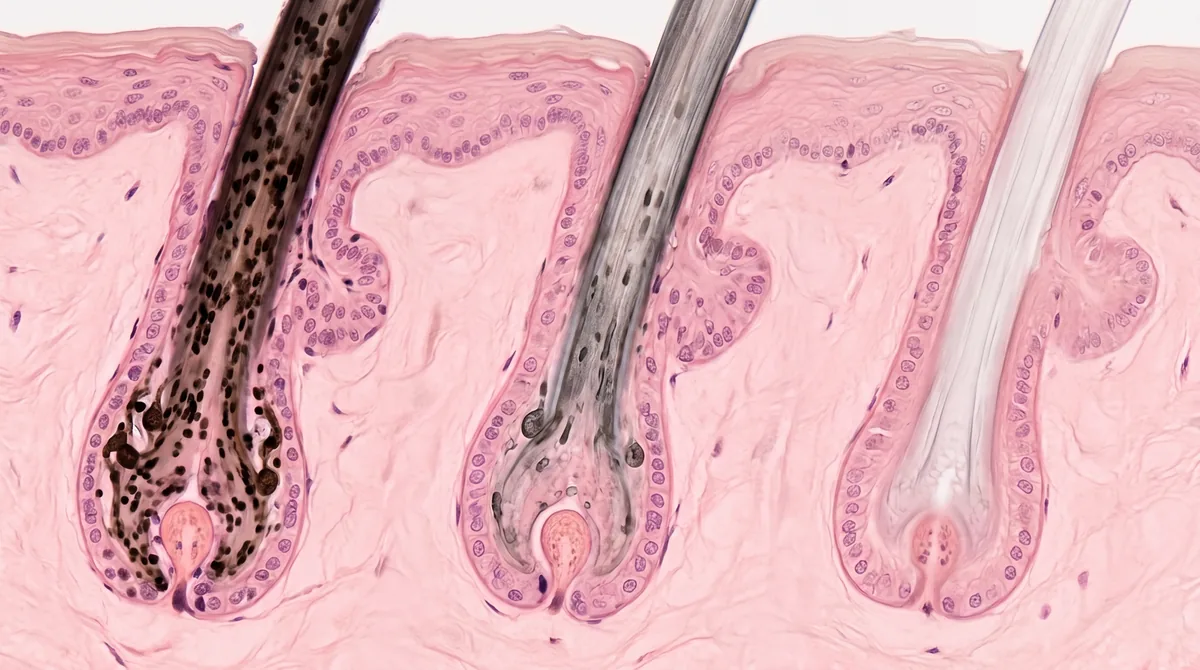
Every hair on your head gets its color from melanocytes, specialized pigment-producing cells located in the follicle bulb. These cells manufacture melanin (the same pigment that colors your skin) and inject it into growing keratinocytes as your hair forms.
But melanocytes don’t last forever. Each follicle has a small reservoir of melanocyte stem cells stored in the bulge region, about halfway up the follicle. During each growth cycle, some of these stem cells migrate down to the bulb, differentiate into active melanocytes, and start producing pigment.
The problem? This stem cell pool gradually depletes. Research published in Cell found that melanocyte stem cells fail to maintain themselves over successive hair cycles. They either differentiate prematurely, migrate incorrectly, or simply die off.
When the stem cell reservoir is exhausted, the follicle can no longer produce pigment. The hair grows in white. That’s greying.
The process is gradual and follicle-specific. One follicle might grey while the one next to it keeps producing pigment for another decade. That’s why greying typically starts with scattered strands rather than sudden total depigmentation.
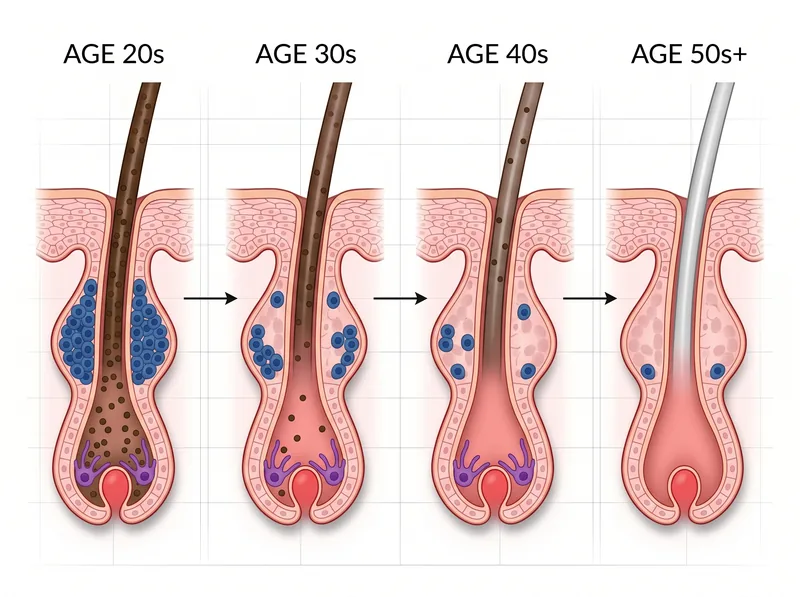 The melanocyte stem cell reservoir gradually depletes with age, leading to progressive greying as follicles lose their ability to regenerate pigment-producing cells.
Why Timing Varies So Dramatically
Some people find their first grey hair at 22. Others don’t grey significantly until their 50s. The variation is massive, and it’s mostly genetic.
The 50-50-50 rule is a rough guideline: about 50% of people will have 50% grey hair by age 50. But that’s an average that hides enormous individual variation.
Your genetic makeup determines the baseline rate of melanocyte stem cell depletion. If your parents greyed early, you probably will too. A 2016 study identified the IRF4 gene as a major player in greying timing, explaining about 30% of the variation in European populations.
Ethnicity matters. People of European descent typically start greying in their mid-30s. Asian populations tend to grey slightly later, in their late 30s. African populations often don’t see significant greying until their mid-40s.
But genetics isn’t the whole story. Environmental factors, nutritional deficiencies, autoimmune conditions, and oxidative stress all accelerate the process. That’s where things get interesting, and where intervention might actually be possible.
Premature Greying: When Biology Accelerates
Premature greying is typically defined as greying before age 20 in Caucasians, before 25 in Asians, and before 30 in Africans. It affects about 6-23% of the population, depending on ethnicity.
The most common cause? Genetics. If you’re greying in your early 20s and your parent did too, that’s likely the explanation.
But premature greying can also signal underlying health issues. Vitamin B12 deficiency is a well-documented trigger, B12 is essential for melanocyte function, and deficiency accelerates stem cell depletion. Thyroid disorders, particularly hypothyroidism, are another common culprit.
Autoimmune conditions like vitiligo and alopecia areata can cause patchy greying by attacking melanocytes directly. Smoking is a massive accelerator, smokers are 2-4 times more likely to grey prematurely, likely due to increased oxidative stress damaging stem cells.
Chronic psychological stress is another factor, though the mechanism is more complex than most people realize. We’ll get to that.
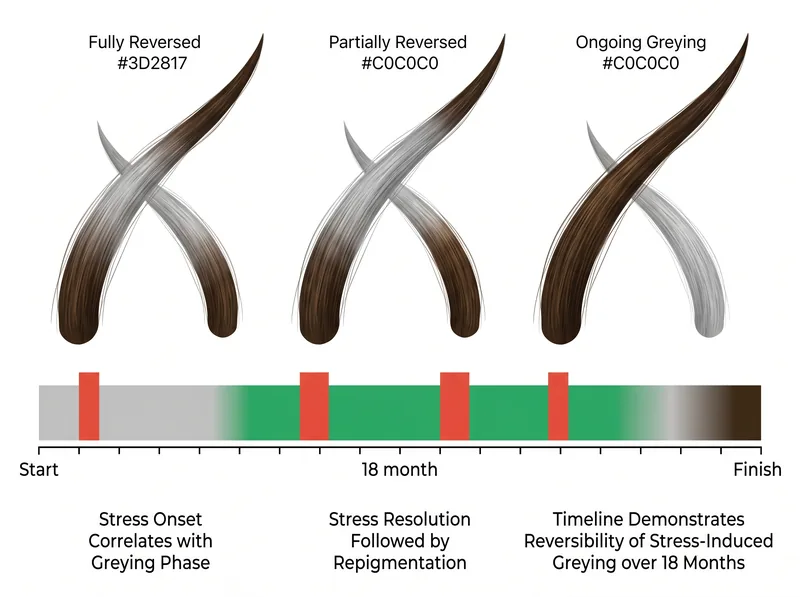 Recent studies documented spontaneous repigmentation of grey hairs when acute stressors were removed, suggesting the process isn’t always permanent.
The Stress-Greying Connection (It’s Real)
The idea that stress causes greying has been dismissed as folklore for decades. Turns out, it’s absolutely real, we just didn’t understand the mechanism until recently.
A 2020 study in Nature showed that acute stress triggers the sympathetic nervous system to release norepinephrine, which causes melanocyte stem cells to rapidly differentiate and migrate out of the bulge. They leave the stem cell niche prematurely, depleting the reservoir.
The study used mice, but the mechanism is conserved in humans. Stress doesn’t turn existing pigmented hair grey overnight (that’s biologically impossible, hair is dead tissue). Instead, it accelerates stem cell depletion, causing the next growth cycle to produce unpigmented hair.
Chronic stress compounds the problem through oxidative damage. Stress increases reactive oxygen species (ROS) production, which damages melanocyte DNA and accelerates cellular aging.
But here’s where it gets fascinating: a 2021 study documented spontaneous repigmentation of grey hairs when acute stressors were removed. Researchers analyzed individual hairs and found segments that had greyed during high-stress periods and then regained pigment when stress resolved.
The reversal wasn’t universal or permanent, but it happened. In some cases, multiple hairs showed coordinated repigmentation following stress reduction, vacation periods, or resolution of specific life stressors.
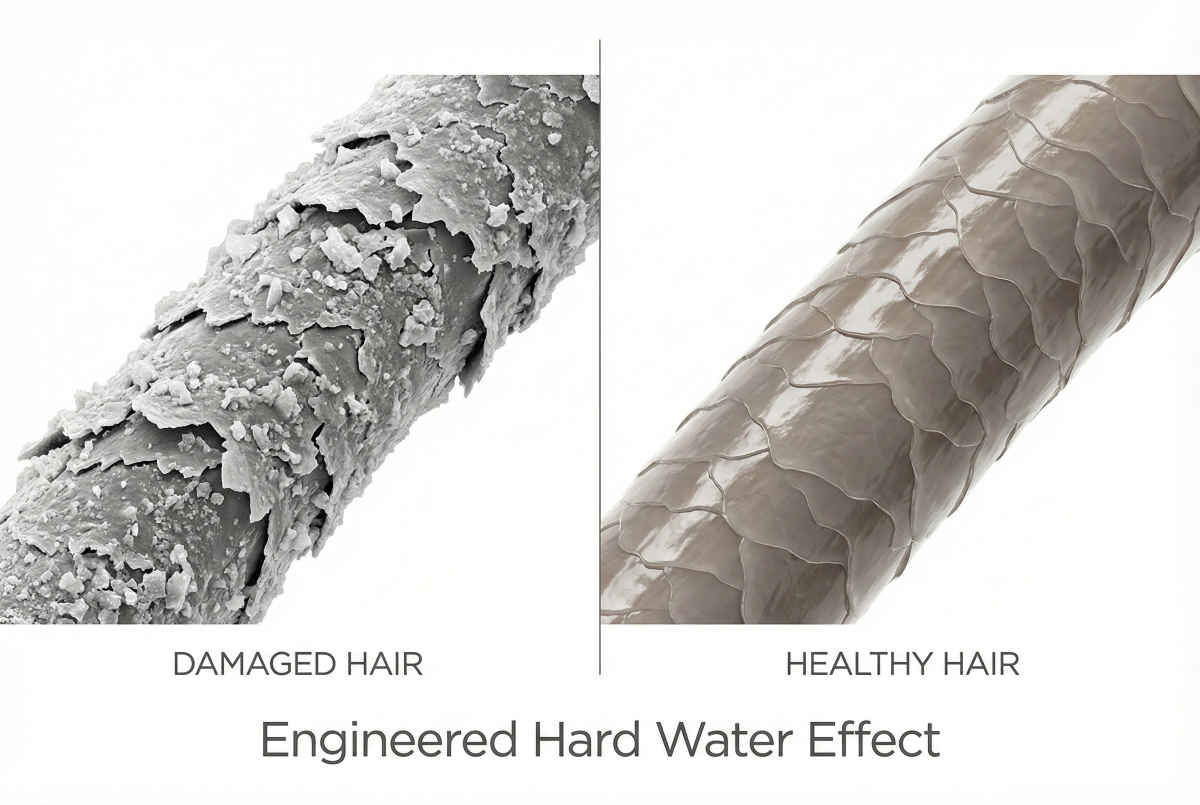
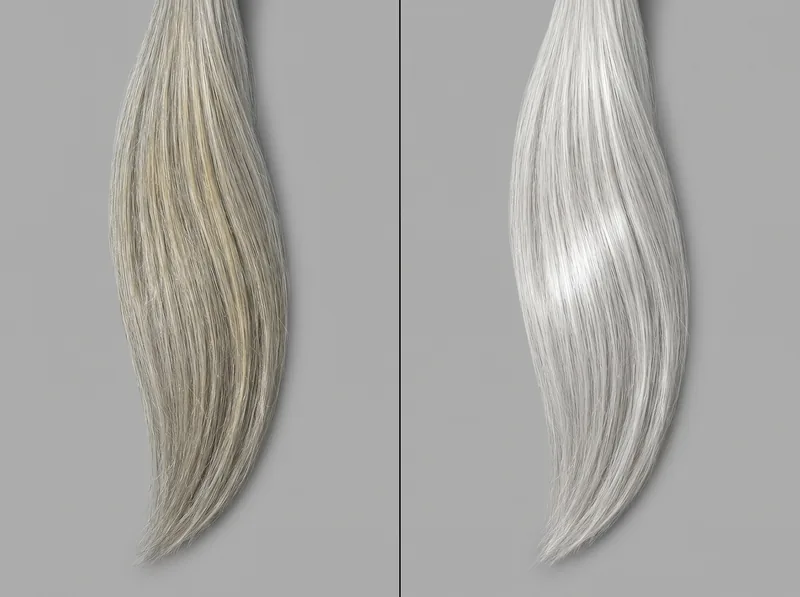 Grey and white hair is more porous than pigmented hair, making it prone to absorbing minerals from hard water that cause yellowing and discoloration.
Can Grey Hair Actually Reverse?
The 2021 repigmentation study made headlines because it challenged a fundamental assumption: that greying is irreversible.
The research tracked 14 volunteers and analyzed 300 individual hairs. About 10-20% of recently greyed hairs showed some degree of repigmentation. The effect was most pronounced in hairs that had greyed recently (within 1-3 years) and in younger individuals (under 40).
The mechanism isn’t fully understood, but the hypothesis is that some follicles retain dormant melanocyte stem cells that can be reactivated under the right conditions. When acute stressors are removed and the follicle environment improves, these cells can resume function, at least temporarily.
This doesn’t mean you can reverse decades of greying by going on vacation. The reversal was partial, temporary, and only occurred in a subset of recently greyed hairs. Long-established grey hairs showed no change.
But it proves the process isn’t as fixed as we thought. There’s a window, probably measured in months to a few years, where recent greying might be reversible if the triggering factor is addressed.
Grey Hair and Environmental Damage
Once hair greys, its structure changes in ways that make it more vulnerable to environmental damage.
Unpigmented hair is more porous than pigmented hair. Melanin granules in pigmented hair occupy space within the cortex, making the structure denser. Without melanin, grey hair has more void space, which means it absorbs water, minerals, and pollutants more readily.
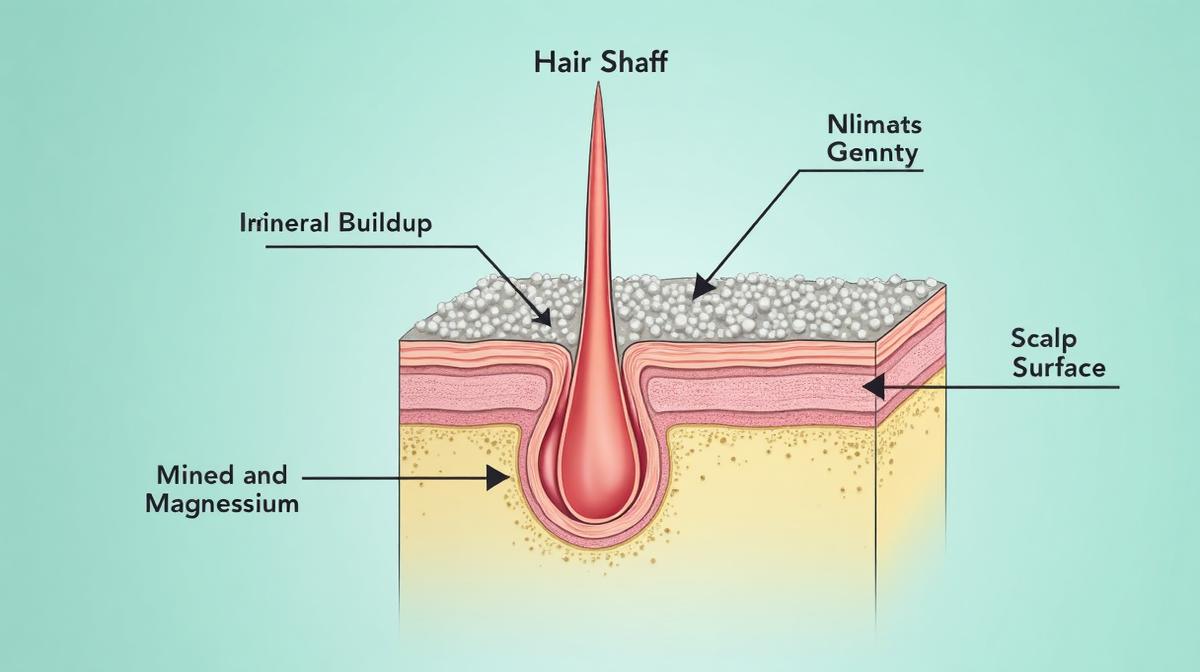
This is particularly problematic in the Gulf region, where hard water is nearly universal. Grey and white hair picks up mineral deposits, calcium, magnesium, copper, iron, much faster than pigmented hair.
The result? That yellowing, brassy tone that many people with grey hair struggle with. It’s not the hair aging further, it’s mineral staining. Copper oxidation gives a greenish cast. Iron creates rust-colored tones. Calcium builds up as a white, chalky residue that dulls shine.
The increased porosity also makes grey hair more prone to damage from UV exposure, chlorine, and styling heat. The cuticle structure is often less uniform, leading to roughness and tangling.
A chelating shampoo like Regrowth+ can remove these mineral deposits, restoring the clean silver tone and improving texture. For grey hair in hard water areas, chelating washes every 1-2 weeks prevent buildup before discoloration becomes visible.
What Actually Slows Greying (Evidence-Based)
You can’t stop greying entirely, it’s a genetically programmed process. But you can potentially slow the rate, especially if you’re greying prematurely.
First: address nutritional deficiencies. Vitamin B12, folate, and copper are all essential for melanocyte function. If you’re deficient, supplementation can restore normal pigmentation in newly growing hairs. This won’t reverse existing grey, but it can prevent further greying if deficiency was the trigger.
Antioxidant intake matters. Oxidative stress accelerates melanocyte stem cell depletion, so dietary antioxidants (vitamins C and E, selenium, polyphenols from berries and green tea) may offer some protection. The evidence is observational, not definitive, but the mechanism is plausible.
Quit smoking. The data here is unambiguous, smoking dramatically accelerates greying through oxidative damage and reduced blood flow to follicles.
Manage chronic stress. This doesn’t mean occasional bad days, it means sustained, unmanaged psychological stress. The sympathetic nervous system activation that depletes melanocyte stem cells is triggered by chronic stress, not acute stressors.
Protect your scalp from UV damage. Melanocyte stem cells in the bulge region can be damaged by UV radiation penetrating the scalp. Hats, UV-protective hair products, and avoiding prolonged sun exposure may help preserve the stem cell reservoir.
There’s no evidence that topical treatments, supplements marketed for ‘grey reversal,’ or scalp massage affect greying. The process happens deep in the follicle bulb and bulge, beyond the reach of topical products.
References
- Quantitative Mapping of Human Hair Greying and Reversal in Relation to Life Stress - eLife
- Hyperactivation of sympathetic nerves drives depletion of melanocyte stem cells - Nature
- Melanocyte Stem Cell Maintenance and Hair Graying - Cell
- A genome-wide association scan in admixed Latin Americans identifies loci influencing facial and scalp hair features - Nature Communications
- Premature Graying of Hair: Review with Updates - International Journal of Trichology