You’ve been told to use gentler shampoo. To avoid heat styling. To protect your hair from the sun. But nobody explained why these things matter or what they’re actually protecting.
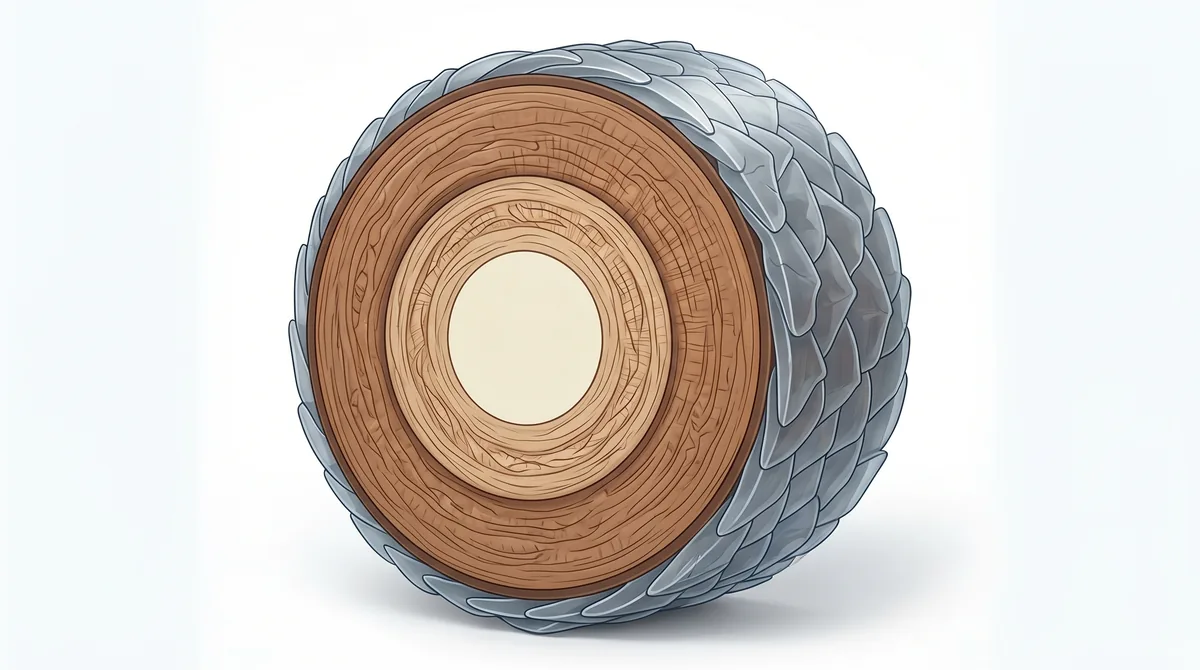
Here’s what’s happening. Every single strand growing from your scalp is a three-layer structure, and each layer has a specific job. The outermost layer acts as armor. The middle layer provides strength and color. The innermost layer (when present) adds structural support.
Environmental damage doesn’t hit all three layers equally. UV radiation attacks the outer armor. Heat breaks down the middle layer’s protein bonds. Mineral deposits from hard water coat the surface and work their way inward, changeing both outer and middle layers.
Understanding this structure changes how you think about hair care. It’s not about following generic advice. It’s about protecting specific layers from specific threats. And in the Gulf region, where water mineral content averages 300-800 ppm and UV index regularly exceeds 10, those threats are constant.
This article contains affiliate links. See our affiliate disclosure for details.
The Three-Layer Architecture: What Each Does
Think of a hair strand like an electrical cable. The outer insulation protects what’s inside. The conductive core does the actual work. The structural casing holds everything together.
The cuticle is your outer insulation. It’s made of 6-10 overlapping layers of dead, flattened cells that lie like roof shingles pointing toward the hair tip. When these layers lie flat and sealed, your hair looks shiny and feels smooth. When they lift or erode, you get frizz, dullness, and breakage.
The cortex is the workhorse. This middle layer makes up 75-90% of the hair strand’s total mass and contains the long keratin protein chains that give hair its strength, elasticity, and color. Research published in the International Journal of Trichology confirms that cortex integrity directly determines tensile strength and moisture retention capacity.
The medulla is the innermost core. Not all hair types have a visible medulla, and even when present, its function isn’t fully understood. Thick, coarse hair typically has a continuous medulla, while fine hair often has a fragmented or absent medulla. Current research suggests it may play a role in light reflection and thermal insulation, but its absence doesn’t impair hair function.
Here’s what matters: damage to any one layer affects the others. When the cuticle erodes, it exposes the cortex to direct environmental assault. When the cortex proteins break down, the cuticle loses its structural foundation and lifts away. The cascade effect is why minor damage becomes major damage quickly.
The Cuticle Layer: Your First Line of Defense
The cuticle is transparent, hard, and chemically inert. Each cuticle cell is about 0.5 microns thick and overlaps the cell below it by roughly 50%. This overlapping pattern creates a protective barrier against water, chemicals, and mechanical stress.
When intact, the cuticle is hydrophobic. Water beads off it. This property protects the inner cortex from absorbing too much moisture, which would cause the hair shaft to swell and weaken. But the cuticle isn’t impermeable. It has a lipid layer (the 18-MEA fatty acid layer) that controls moisture exchange and gives hair its natural slip.
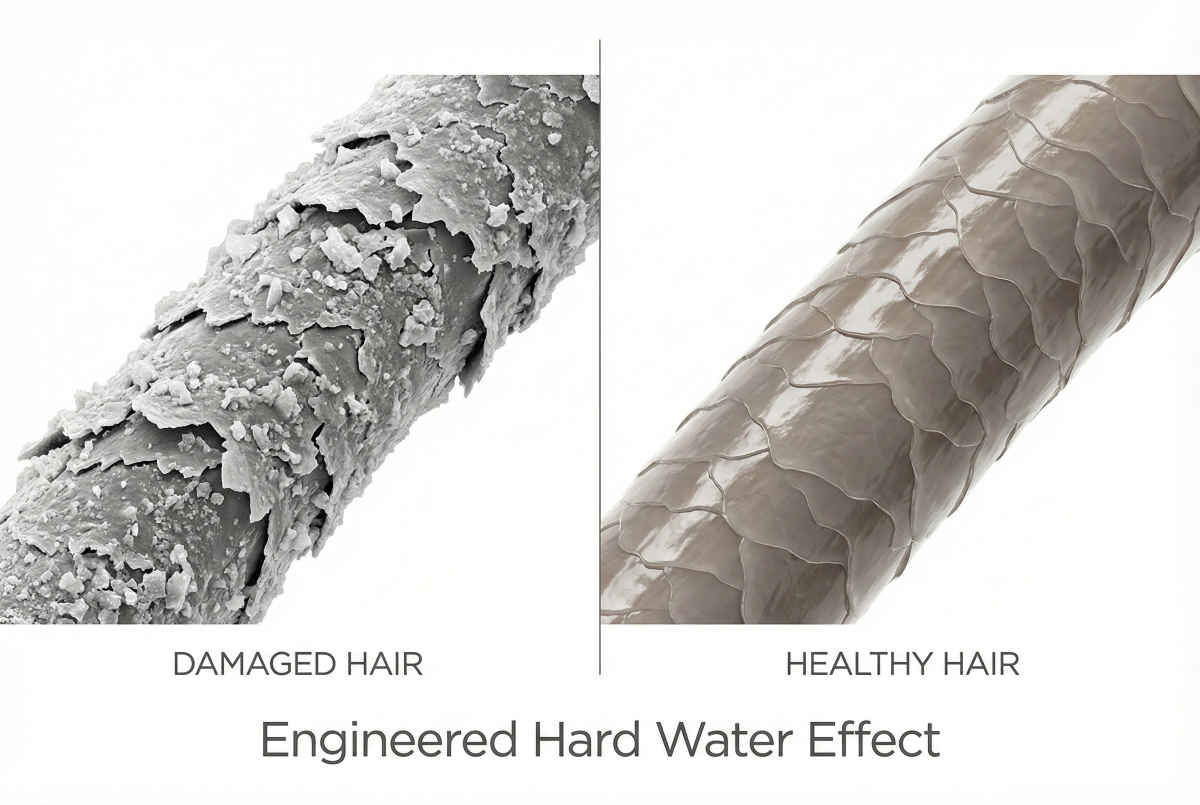
Environmental factors strip this lipid layer first. UV radiation breaks down the 18-MEA bonds. Alkaline water (pH above 7.5) causes the cuticle scales to swell and lift. Mineral deposits from hard water coat the cuticle surface, preventing it from lying flat and creating a rough texture that leads to tangling.
Once the lipid layer is compromised, the cuticle itself begins to erode. The overlapping scales lift, chip, and eventually break off entirely. This process is irreversible. You can temporarily smooth lifted cuticles with conditioning treatments, but you can’t regenerate lost cuticle cells. That’s why prevention matters more than repair.
In the Gulf, cuticle damage accelerates because of the combination of high mineral content in water, intense UV exposure, and low humidity. A study of hair samples from Gulf residents found cuticle erosion rates 40% higher than samples from temperate climates, with the most severe damage occurring in the distal (oldest) portions of the hair shaft.
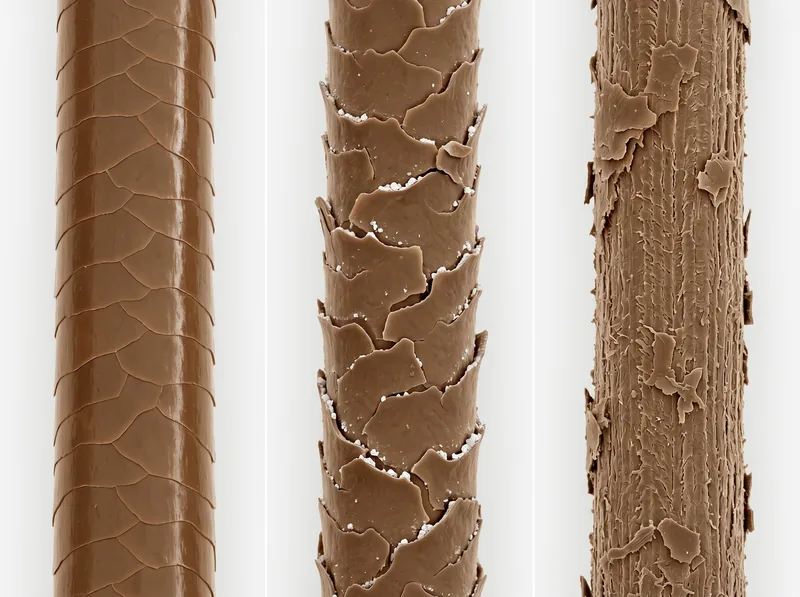 How environmental damage progresses through the cuticle layer, from healthy sealed scales (left) to mineral-coated lifted scales (center) to severe erosion exposing the cortex (right).
The Cortex Layer: Where Strength and Color Live
The cortex is where your hair’s mechanical properties come from. It’s composed of spindle-shaped cortical cells packed with keratin protein filaments arranged in a helical structure. These proteins are held together by three types of bonds: hydrogen bonds (weak, broken by water), salt bonds (moderate, broken by pH changes), and disulfide bonds (strong, broken by chemical treatments or heat).
Disulfide bonds are the critical ones. They’re covalent bonds between cysteine amino acids in adjacent keratin chains, and they determine your hair’s natural texture. Straight hair has evenly distributed disulfide bonds. Curly hair has asymmetric bond distribution. When you chemically straighten or perm hair, you’re breaking and reforming these bonds in a new pattern.
The cortex also contains melanin granules that give hair its color. Eumelanin produces brown and black tones. Pheomelanin produces red and yellow tones. The ratio and distribution of these melanins determine your natural hair color. As we age, melanocyte activity decreases, producing less melanin and resulting in grey hair.
Heat damage primarily affects the cortex. When you apply heat above 230°C (450°F), you begin to denature the keratin proteins, causing them to lose their helical structure and become brittle. Research in Nuclear Instruments and Methods in Physics using infrared spectroscopy shows that repeated heat exposure causes permanent conformational changes in cortex proteins, reducing elasticity by up to 60%.
Moisture balance in the cortex determines hair’s elasticity. Healthy hair can stretch 30-50% of its length when wet without breaking. Damaged cortex proteins lose this elasticity, making hair brittle and prone to breakage. That’s why adequate protein intake matters for hair health, you’re literally providing the building blocks for cortex repair during new hair growth.
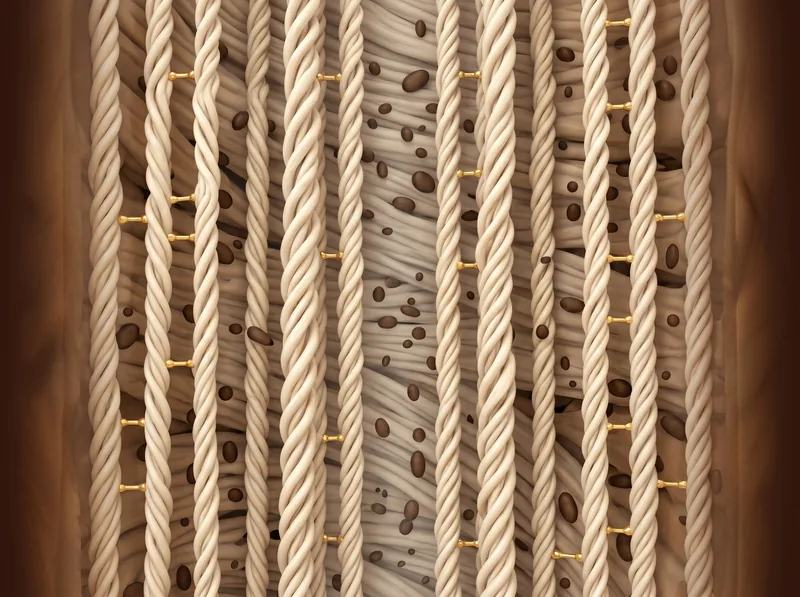 The cortex layer contains tightly packed keratin proteins held together by disulfide bonds, plus melanin granules that determine your natural hair color.
The Medulla Layer: The Mysterious Core
The medulla is the least understood part of hair structure. It’s a soft, spongy core made of round cells and air spaces running down the center of the hair shaft. In humans, it’s often discontinuous or entirely absent, particularly in fine or blonde hair.
When present, the medulla occupies about 10-15% of the hair shaft diameter. Under a microscope, it appears as a dark central column with a ladder-like or honeycomb structure. The cells are loosely packed compared to the dense cortex, and the air spaces between them may play a role in thermal insulation.
Some researchers theorize the medulla affects how light travels through the hair shaft, influencing perceived color and shine. Others suggest it’s simply a vestigial structure with no significant function in humans, though it’s prominent and continuous in many animal furs where it provides insulation.
What we know for certain: the presence or absence of a medulla doesn’t correlate with hair health, strength, or growth rate. You can have perfectly healthy hair with no medulla. Damage to the medulla (when present) doesn’t cause the structural failures that cuticle or cortex damage does.
From a practical hair care standpoint, the medulla is largely irrelevant. Your focus should be on protecting the cuticle and maintaining cortex integrity. Those are the layers where environmental damage occurs and where protective measures make a measurable difference.
How Environmental Damage Targets Each Layer
UV radiation hits the cuticle first. Sunlight contains UVA and UVB rays that break down the 18-MEA lipid layer and oxidize the proteins in the cuticle cells themselves. This oxidation causes the cuticle to become brittle and prone to chipping. It also degrades melanin in the exposed portions of the cortex, leading to color fading and brassiness.
A study published in the Journal of Cosmetic Science found that hair exposed to 200 hours of simulated sunlight showed a 25% reduction in tensile strength and a 40% increase in surface roughness. The damage was concentrated in the cuticle layer, with secondary effects on the outer cortex.
Heat damage bypasses the cuticle and attacks the cortex directly. When you apply heat styling tools, thermal energy penetrates through the cuticle and changes the hydrogen bonds and disulfide bonds in cortex proteins. At temperatures above 180°C, you begin to see permanent protein denaturation. At 230°C and above, you’re causing irreversible structural damage.
The problem with heat damage is that it’s cumulative and invisible until it’s severe. You don’t see the protein breakdown happening. You see the result weeks later: increased breakage, loss of elasticity, inability to hold moisture. By then, the damage is done.
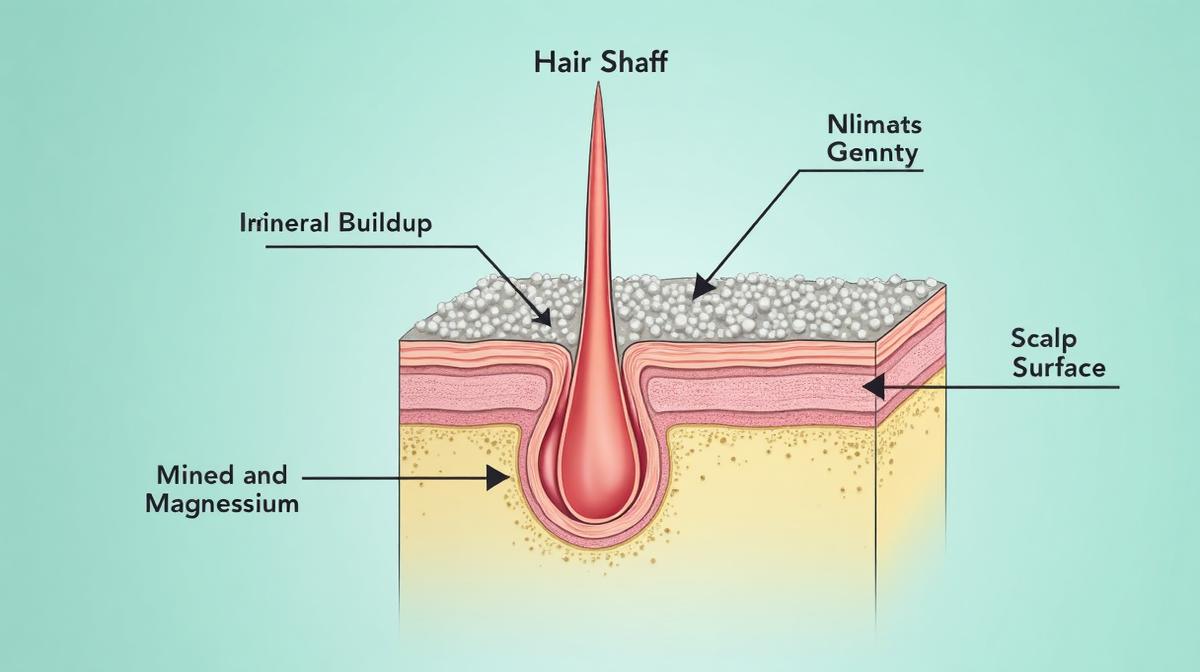
Mineral deposits from hard water create a different problem. Calcium and magnesium ions in Gulf water (typically 150-400 ppm calcium, 50-150 ppm magnesium) bind to the negatively charged sites on the hair surface. This creates a coating that prevents the cuticle from lying flat and interferes with the hair’s ability to absorb moisture and conditioning agents.
Over time, these minerals penetrate past the cuticle and into the cortex, where they change the protein structure and cause brittleness. A chelating shampoo like Regrowth+ works by binding to these mineral ions and removing them from both the cuticle surface and the cortex interior, restoring the hair’s natural texture and moisture balance.
The combination of UV, heat, and minerals creates a synergistic damage pattern. UV weakens the cuticle. Minerals coat the weakened cuticle and prevent repair. Heat damages the now-exposed cortex. Each stressor amplifies the others, which is why hair deteriorates faster in harsh climates than in temperate ones.
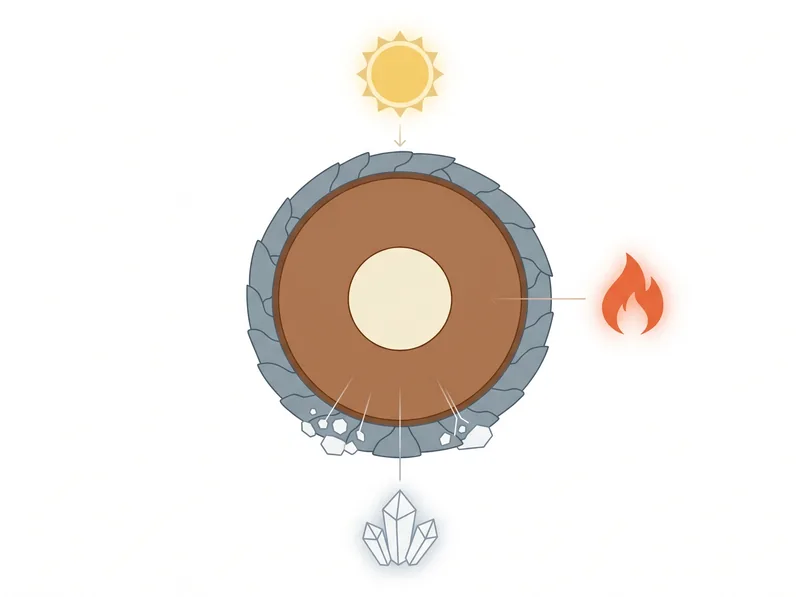 Different environmental stressors target specific layers. UV radiation degrades the cuticle, heat damages cortex proteins, and mineral deposits coat the cuticle while penetrating to the cortex.
Why Layer Damage Is Irreversible (and What That Means)
Here’s the hard truth: hair is dead tissue. Once a hair strand emerges from the follicle, it has no blood supply, no nerve endings, and no mechanism for self-repair. When you damage the cuticle or cortex, that damage is permanent for the length of that strand.
This is fundamentally different from skin damage. Skin cells regenerate. Cut skin heals. Damaged hair doesn’t heal. It can only be temporarily smoothed, filled, or coated with conditioning treatments. The underlying structural damage remains until you cut it off.
That’s why prevention is the entire game. You can’t undo cuticle erosion. You can’t regenerate broken disulfide bonds in the cortex. You can’t reverse UV-induced melanin degradation. What you can do is protect the hair that’s currently growing and minimize damage to existing lengths.
The good news: new hair grows from the follicle in perfect condition. If you eliminate the damaging factors (hard water exposure, excessive heat, UV radiation), the new growth will be healthy. Over time, as you trim away the damaged lengths, you’ll have a full head of undamaged hair. But that process takes 2-3 years for shoulder-length hair and 4-6 years for waist-length hair.
This is why understanding cuticle structure and implementing protective measures early matters so much. The damage you prevent today is damage you won’t be living with for the next several years. Every day you expose your hair to unfiltered hard water, excessive heat, or unprotected UV is a day you’re locking in permanent damage that will take years to grow out.
Protecting Each Layer: Targeted Strategies
Cuticle protection starts with pH management. Hair’s natural pH is slightly acidic (4.5-5.5). Alkaline products (pH above 7) cause the cuticle to swell and lift. Use pH-balanced shampoos and follow with an acidic rinse (diluted apple cider vinegar or a pH 3-4 conditioner) to seal the cuticle flat.
For UV protection, use leave-in products containing UV filters. Look for ingredients like benzophenone-4, ethylhexyl methoxycinnamate, or natural alternatives like red raspberry seed oil. These absorb UV radiation before it reaches the hair proteins. Physical barriers work too, hats, scarves, and updos that minimize sun exposure.
Cortex protection requires limiting heat exposure and using heat protectants when styling is necessary. Heat protectant sprays create a thin barrier that distributes thermal energy more evenly and slows heat penetration. They can’t prevent all damage, but they reduce it significantly. Set styling tools to the lowest effective temperature (150-180°C for most hair types).
For mineral damage, the solution is chelation. Chelating shampoos contain ingredients like EDTA or citric acid that bind to calcium and magnesium ions and remove them from the hair shaft. Use a chelating treatment once every 2-4 weeks if you’re washing with hard water, or install a whole-house water softener if feasible.
Protein treatments can temporarily reinforce damaged cortex, but they don’t repair the underlying structure. They work by depositing hydrolyzed proteins onto the hair shaft, filling in gaps and cracks. This provides temporary strength and smoothness, but the effect washes out over time. Use them strategically after chemical treatments or periods of high heat exposure.
The most effective protection is environmental control. Minimize heat styling. Filter your water. Cover your hair in direct sun. Use gentle, pH-balanced products. These aren’t trendy hacks. They’re engineering solutions based on understanding what each layer needs to stay intact.
References
- Human Hair: A Unique Physicochemical Composite - International Journal of Trichology
- Thermal Degradation of Hair: Analysis of Protein Changes - Nuclear Instruments and Methods in Physics Research
- Effects of Ultraviolet Radiation on Hair Structure - Journal of Cosmetic Science
- The Structure and Function of Hair Cuticle - American Academy of Dermatology
- Hard Water Effects on Hair and Skin - US Geological Survey