You flip over your shampoo bottle and see “paraben-free” stamped across the label. You’ve heard parabens are bad. Something about hormones and cancer. But when you try to find actual evidence, the story gets murky fast.
Here’s what’s frustrating: the paraben debate has become so polarized that finding honest, evidence-based information feels impossible. One camp treats parabens like toxic waste. The other insists they’re perfectly safe. Both can’t be right.
This article examines what peer-reviewed research actually shows about parabens and other preservatives in hair products. We’ll look at the endocrine studies everyone cites, the dose levels that matter, and what replaces parabens when manufacturers remove them. This article contains affiliate links. See our affiliate disclosure for details.
Let’s start with the basics: what parabens are, why they’re in your shampoo, and why the controversy started in the first place.
What Parabens Are and Why They’re Everywhere
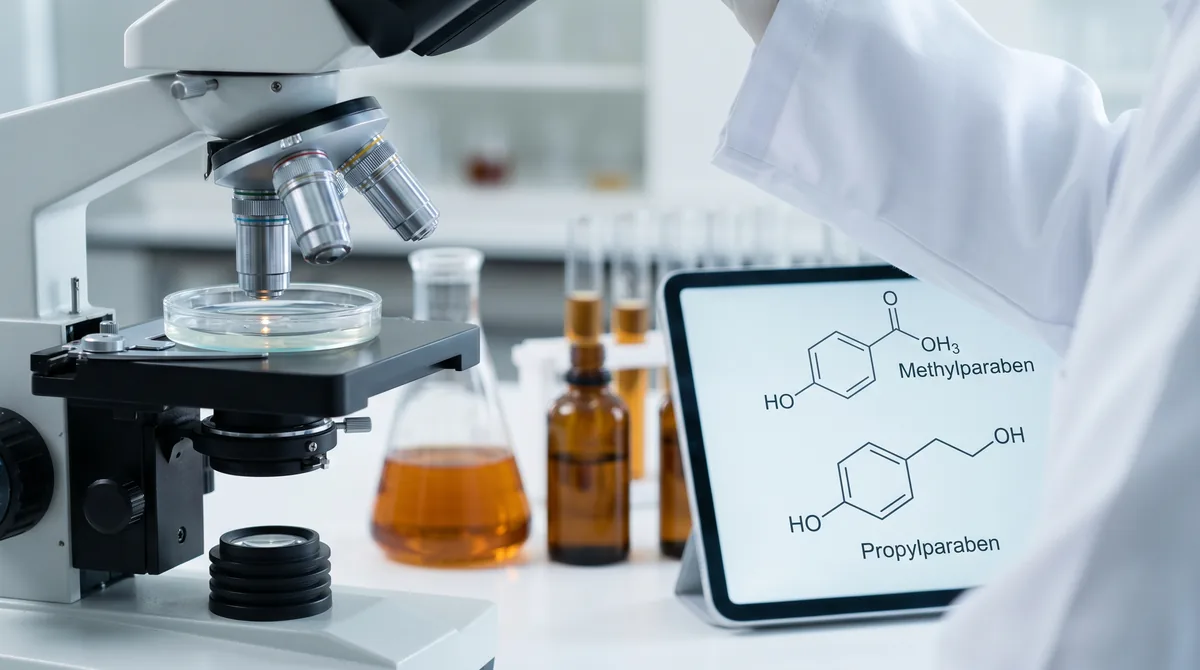
Parabens are a family of synthetic preservatives used in cosmetics, pharmaceuticals, and food products since the 1950s. The most common types you’ll see on ingredient lists are methylparaben, propylparaben, butylparaben, and ethylparaben.
They work by changeing microbial cell membranes. Bacteria and fungi can’t survive in paraben-preserved products, which prevents contamination that could cause skin infections, eye infections, or worse. This isn’t theoretical. Before modern preservatives, contaminated cosmetics regularly caused serious illness.
Parabens became the industry standard because they check every box: broad-spectrum antimicrobial activity, stable across pH ranges, colorless, odorless, non-irritating at typical use concentrations, and cheap to manufacture. A 2006 study in the Journal of Applied Toxicology found parabens in 99% of leave-on cosmetic products tested.
The concentration in most hair products ranges from 0.01% to 0.3% by weight. That’s low. But you’re exposed to parabens from multiple sources daily: shampoo, conditioner, lotion, makeup, toothpaste, even some foods. This cumulative exposure is where the safety questions begin.
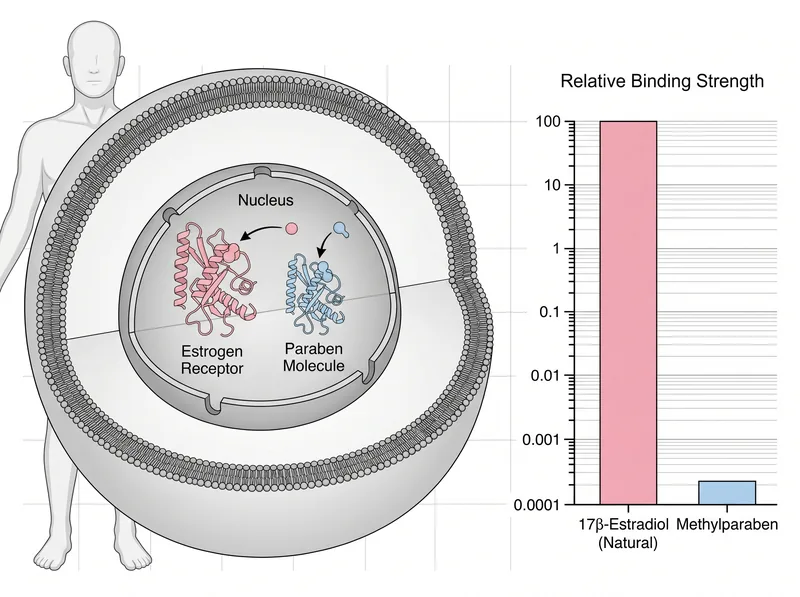 Parabens can bind to estrogen receptors, but at potency levels 10,000 to 100,000 times weaker than natural estrogen
The Endocrine Changeion Research Everyone Misquotes
The paraben controversy exploded in 2004 when researcher Philippa Darbre published a study detecting parabens in breast tumor tissue. Media coverage implied parabens cause cancer. That’s not what the study showed.
Darbre’s research found parabens present in 18 of 20 breast tumor samples. But presence doesn’t equal causation. The study didn’t compare paraben levels in tumor tissue versus healthy tissue. It didn’t establish that parabens caused the tumors. It simply documented that parabens can accumulate in tissue.
The real scientific concern is about estrogenic activity. Parabens can weakly bind to estrogen receptors in cells, mimicking the hormone’s effects. This was demonstrated in a 1998 study published in Toxicology and Applied Pharmacology, which tested parabens in rat uterine tissue.
Here’s the critical context: parabens are 10,000 to 100,000 times weaker than natural estrogen (17β-estradiol) at binding to estrogen receptors. Butylparaben, the strongest of the common parabens, showed estrogenic activity at 0.00001 times the potency of actual estrogen.
Your body produces estrogen naturally. You consume phytoestrogens in soy, flaxseeds, and other foods that are far more potent than parabens. The question isn’t whether parabens have estrogenic activity. It’s whether the dose you’re exposed to matters.
What Regulatory Agencies Actually Concluded
In 2005, the Cosmetic Ingredient Review (CIR) Expert Panel reviewed all available paraben safety data and reaffirmed their safety at concentrations up to 25% in cosmetics. That’s 80 times higher than typical use levels.
The European Union’s Scientific Committee on Consumer Safety (SCCS) conducted multiple reviews. Their 2013 opinion concluded that methylparaben and ethylparaben are safe at concentrations up to 0.4% in cosmetic products. They expressed more caution about propylparaben and butylparaben, setting a limit of 0.14% for these longer-chain parabens.
The U.S. Food and Drug Administration’s position, last updated in 2022, states: “At the present time, FDA does not have information showing that parabens as they are used in cosmetics have an effect on human health.” They continue to monitor emerging research but haven’t restricted paraben use.
The American Cancer Society reviewed the evidence and concluded there’s no clear link between paraben exposure from cosmetics and cancer risk. They note that the Darbre study didn’t establish causation and that subsequent research hasn’t demonstrated that parabens cause tumors.
This doesn’t mean parabens are risk-free. It means current evidence doesn’t support the alarm level you see in marketing claims. The regulatory consensus is that parabens at cosmetic-use concentrations pose minimal risk to most people.
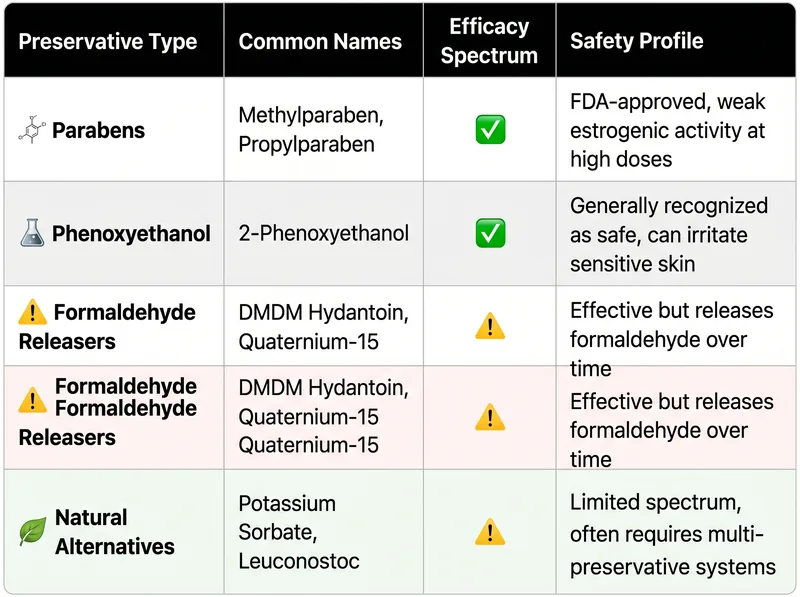 Common preservative systems in modern hair products and their documented safety profiles
What Replaces Parabens When Manufacturers Remove Them
The “paraben-free” label sounds reassuring. But products still need preservatives. What manufacturers use instead often gets less scrutiny than it deserves.
Phenoxyethanol is now the most common paraben replacement. It’s effective against bacteria and reasonably gentle. But it can cause allergic reactions and skin irritation in sensitive individuals, particularly at concentrations above 1%. Some studies suggest it may affect reproductive hormones, though at much higher doses than cosmetic use.
Formaldehyde-releasing preservatives like DMDM hydantoin, diazolidinyl urea, and quaternium-15 are still widely used. These compounds slowly release formaldehyde over time to kill microbes. Formaldehyde is a known human carcinogen and a common contact allergen. The Environmental Working Group rates these ingredients as high concern.
Methylisothiazolinone (MIT) and methylchloroisothiazolinone (MCI) are potent preservatives that work at very low concentrations. They’re also potent sensitizers. The European Commission’s Scientific Committee restricted their use after widespread contact dermatitis cases. Many manufacturers have phased them out, but they’re still in some products.
“Natural” preservative systems typically combine multiple ingredients: potassium sorbate, sodium benzoate, leuconostoc/radish root ferment, and essential oils. These systems are less effective than synthetic preservatives, which is why you’ll often see shorter shelf lives or “refrigerate after opening” instructions on natural products.
The irony? Many paraben alternatives have less safety data than parabens themselves. Parabens have been studied for 70 years. Some replacements have been in use for less than a decade. We’re essentially running a large-scale experiment on consumers.
The Cumulative Exposure Question Nobody Can Answer
Here’s where it gets complicated. You’re not exposed to parabens from just one product. You use shampoo, conditioner, body wash, lotion, sunscreen, makeup, toothpaste. A 2010 study in Environmental Health Perspectives detected parabens in 99% of urine samples from U.S. adults.
Women show higher urinary paraben concentrations than men, likely due to greater cosmetic use. Adolescent girls have particularly high exposure levels. The same study found that paraben levels in some individuals exceeded the levels used in toxicity studies.
The body metabolizes and excretes parabens relatively quickly. Methylparaben has a half-life of about 1.8 hours. But you’re applying paraben-containing products daily, creating constant low-level exposure. Does this chronic exposure accumulate in tissue? We don’t fully know.
The endocrine changeion concern isn’t about a single exposure. It’s about whether daily, lifelong exposure to multiple weak endocrine changeors (parabens, phthalates, BPA, etc.) creates a cumulative effect. This is called the “cocktail effect,” and it’s notoriously difficult to study.
No regulatory agency has established a safe daily intake limit for total paraben exposure from all sources combined. The studies that declared parabens safe typically looked at single-product exposure, not real-world cumulative use.
Making Sense of the Evidence for Your Own Hair Care
So what does this mean for choosing hair products? The evidence supports a few practical conclusions.
First, parabens at cosmetic concentrations aren’t the health crisis some marketing suggests. If you’ve been using paraben-containing products without issues, the current evidence doesn’t support panic-switching to alternatives.
Second, if you want to reduce paraben exposure as a precautionary measure, that’s reasonable. Particularly for pregnant women, nursing mothers, or those with hormone-sensitive conditions, minimizing exposure to any endocrine-active compounds makes sense even in the absence of definitive harm data.
Third, don’t assume “paraben-free” means safer. Check what preservatives replace them. A product with phenoxyethanol or a formaldehyde releaser isn’t automatically better than one with methylparaben. In the Gulf region, where hard water already stresses hair, adding a harsh preservative system can compound damage.
Fourth, consider the product type. Leave-on products (styling creams, serums) have longer skin contact than rinse-off products (shampoo, conditioner). If you’re reducing paraben exposure, prioritize switching leave-on products first.
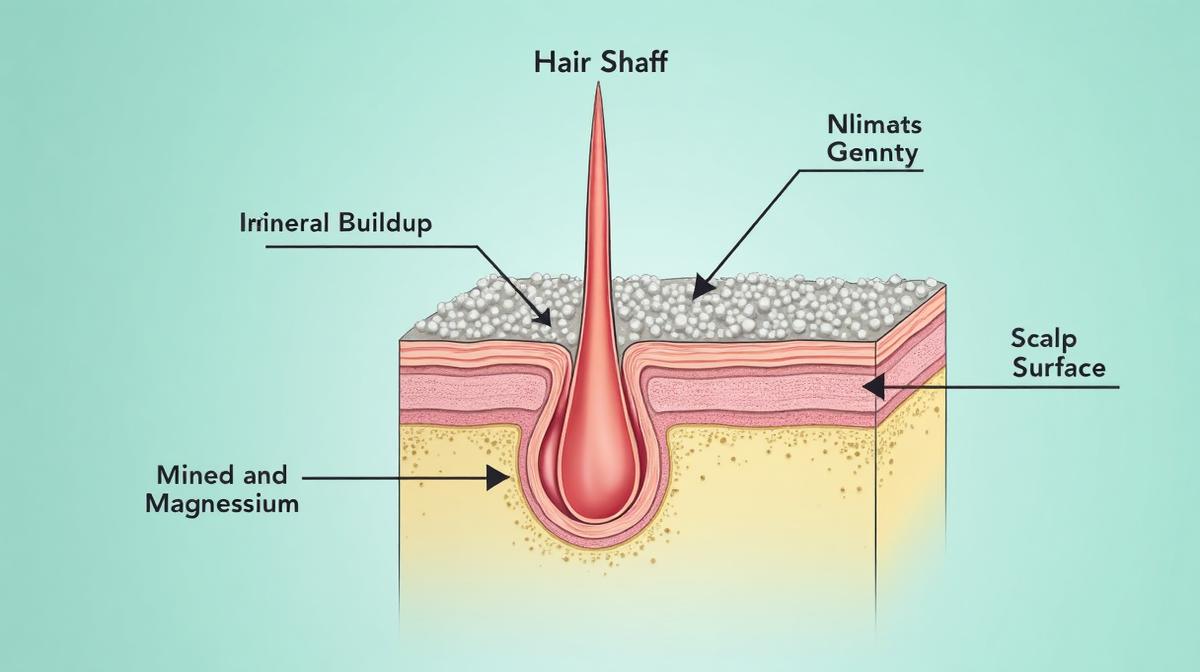
For scalp health specifically, preservative choice matters less than overall product formulation. A chelating shampoo like Regrowth+ addresses mineral buildup from hard water, which is a more immediate concern for Gulf residents than preservative type. The preservative system keeps the product safe. The active ingredients do the work.
The honest answer is that we don’t have perfect information. Parabens have more safety data than most alternatives, but questions about cumulative exposure remain. You’re making a decision under uncertainty. That’s frustrating, but it’s the reality of cosmetic science in 2026.
References
- Parabens Detection in Different Zones of the Human Breast: Consideration of Source and Implications of Findings - Journal of Applied Toxicology
- Estrogenic Activity of Parabens in MCF-7 Human Breast Cancer Cells - Toxicology and Applied Pharmacology
- Urinary Concentrations of Parabens and Their Association with Demographic Factors - Environmental Health Perspectives
- Scientific Committee on Consumer Safety Opinion on Parabens - European Commission
- Parabens Factsheet - U.S. Food and Drug Administration