This article contains affiliate links. See our affiliate disclosure for details.
You’ve heard it a thousand times. Silicones are bad. They suffocate your hair. They cause buildup. They’re the reason your expensive products aren’t working. The beauty internet has declared war on dimethicone, and the silicone-free movement has convinced millions that these ingredients are destroying their hair.
Here’s the thing. The chemistry doesn’t support the hysteria. Silicones aren’t inherently good or bad, they’re tools. And like any tool, they work brilliantly in the right context and poorly in the wrong one. The real story involves molecular weight, water solubility, and how these synthetic polymers interact with everything else coating your hair, including the mineral deposits that nobody talks about.
If you’re in the Gulf region, this matters more than you think. The combination of hard water mineral buildup and silicone layers creates a compound problem that most product formulations weren’t designed to address. Understanding the actual chemistry helps you make informed decisions instead of following internet dogma.
What Silicones Actually Do (The Chemistry)
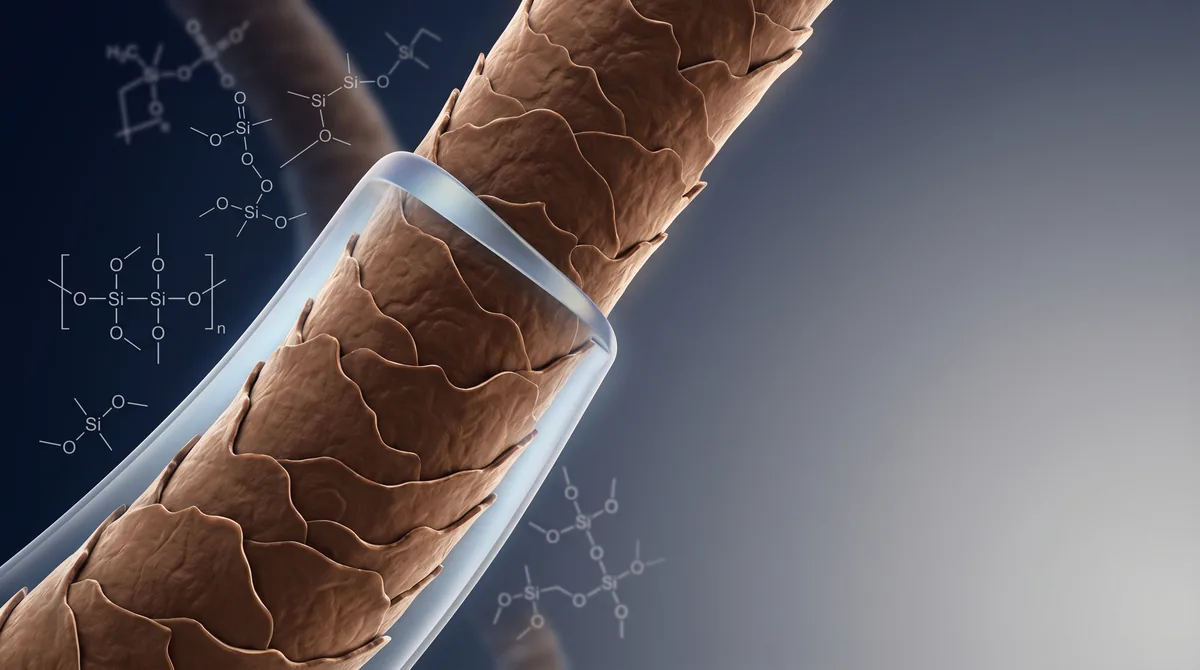
Silicones are synthetic polymers built on a silicon-oxygen backbone. That Si-O-Si chain is incredibly flexible and stable, which makes silicones uniquely suited for coating hair without breaking down under heat or oxidation. They’re hydrophobic (water-repelling) by nature, which is exactly why they work as protective barriers.
When you apply a silicone-containing product, the molecules spread across the hair cuticle and form a thin film. This film smooths down raised cuticle scales, reduces friction between strands, and creates a barrier against humidity. That’s why silicone serums make hair feel instantly smoother and shinier, you’re literally coating each strand with a slippery polymer layer.
The molecular weight matters. A lot. Low-molecular-weight silicones like cyclomethicone are volatile, they evaporate after application, leaving minimal residue. High-molecular-weight silicones like dimethicone are non-volatile, they stay put, providing long-lasting smoothness and protection. Both have legitimate uses. The problem isn’t the silicone itself; it’s using the wrong type for your hair’s current condition and your washing routine.
Research published in the Journal of Cosmetic Science demonstrates that silicones reduce combing forces by up to 45% and significantly decrease friction damage during styling. They’re not cosmetic fluff, they provide measurable mechanical protection.
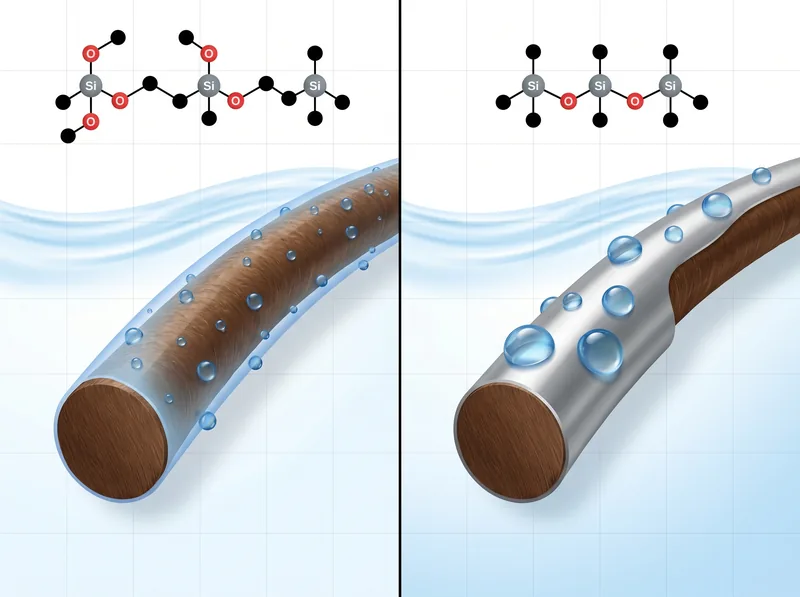 Water-soluble silicones (left) have polar groups that allow water penetration, while non-water-soluble silicones (right) form hydrophobic barriers
Water-Soluble vs Non-Water-Soluble: The Distinction That Changes Everything
Not all silicones behave the same way when you rinse. This is the nuance the silicone-free movement completely ignores.
Non-water-soluble silicones (dimethicone, dimethiconol, cyclomethicone) don’t rinse away with water alone. They require surfactants, the cleansing agents in shampoo, to break down and remove. If you’re using a very gentle, sulfate-free shampoo or co-washing (conditioner-only washing), these silicones will accumulate over time. That’s not a flaw in the ingredient; it’s a mismatch between product chemistry and cleansing routine.
Water-soluble silicones are modified with PEG (polyethylene glycol) groups or other polar molecules that make them hydrophilic. Look for ingredients like PEG-modified dimethicone, dimethicone copolyol, or lauryl methicone copolyol. These rinse away with water and don’t require aggressive surfactants to remove. They provide temporary smoothing and protection without the buildup risk.
If you have fine hair, live in a humid climate, or wash your hair infrequently, water-soluble silicones make sense. If you have thick, coarse, or damaged hair and wash regularly with a clarifying shampoo, non-water-soluble silicones provide superior long-term protection. It’s not about good versus bad, it’s about matching the chemistry to your specific situation.
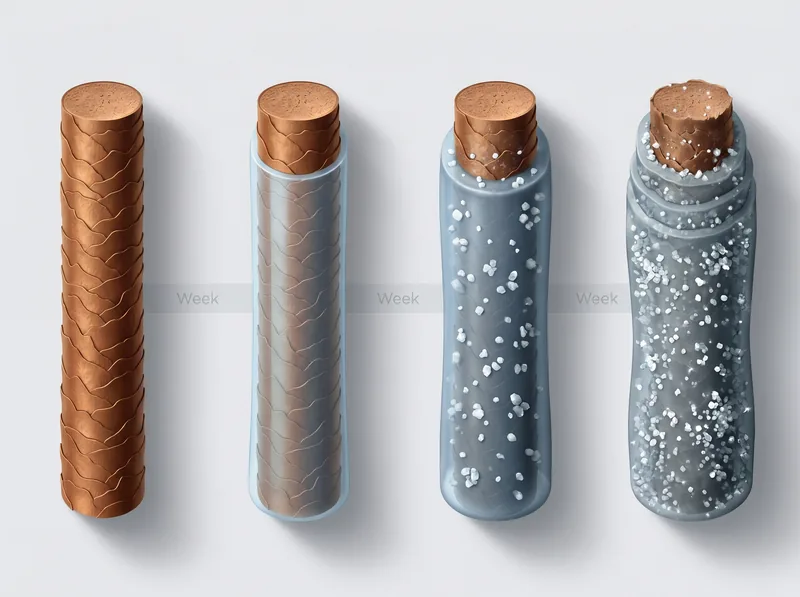 Buildup occurs when non-water-soluble silicones layer over time, especially when combined with hard water minerals
The Real Buildup Problem (And Why It’s Worse in the Gulf)
Silicone buildup is real. But it’s not the horror story you’ve been told. When non-water-soluble silicones layer over weeks without adequate cleansing, they create a progressively thicker coating that can make hair feel heavy, greasy, or limp. New products can’t penetrate the silicone barrier, so your expensive treatments stop working. That’s frustrating, but it’s also reversible with proper cleansing.
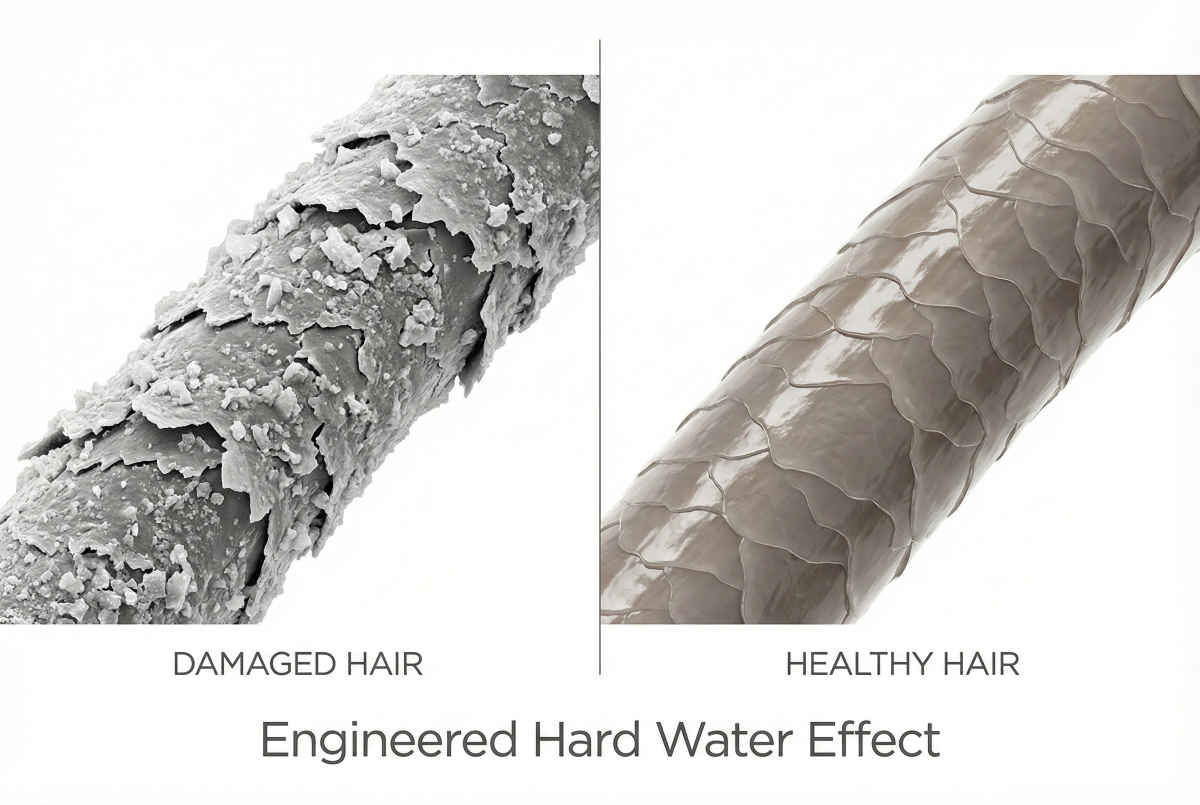
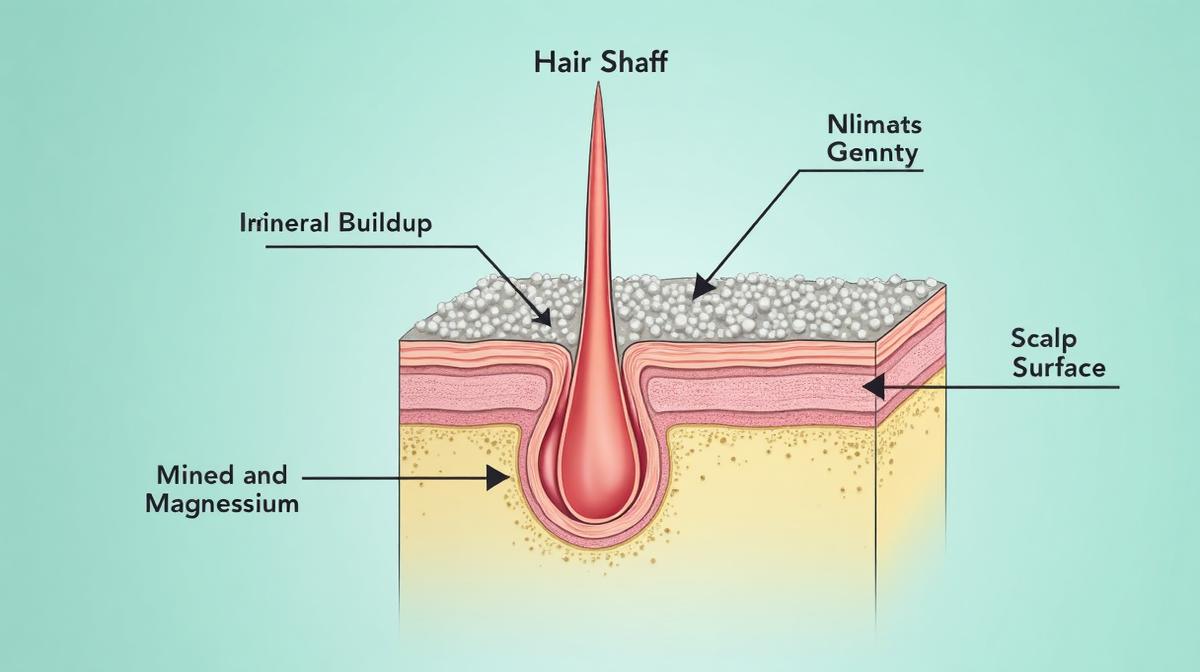
Here’s what makes it worse in the Gulf. Hard water deposits calcium, magnesium, and other minerals onto your hair with every wash. These minerals bind to the silicone layer, creating a compound buildup that’s harder to remove than either substance alone. The minerals make the silicone film less flexible and more prone to flaking. The silicones trap the minerals against the cuticle, preventing them from rinsing away.
A 2019 study in the International Journal of Trichology found that hair exposed to hard water showed significantly more surface deposits when silicone-based products were used compared to silicone-free formulations. The researchers noted that the combination created a ‘cement-like’ layer that required chelating agents to fully remove.
This is why Gulf residents often report that products that worked perfectly in their home countries suddenly feel heavy or stop working after a few weeks here. It’s not just the silicones. It’s the silicones plus the mineral-rich water creating a buildup problem that standard shampoos weren’t formulated to address.
The solution isn’t eliminating silicones entirely. It’s incorporating periodic chelating cleansing, using products that contain EDTA or similar chelating agents that bind to mineral deposits and remove them along with silicone residue. A chelating shampoo like Regrowth+ addresses both the mineral and silicone buildup simultaneously, resetting your hair to a clean baseline.
When Silicones Make Sense (And When They Don’t)
Silicones are protective tools. Use them when you need protection. Heat styling? Silicone serums provide a thermal barrier that reduces damage from flat irons and blow dryers. Chemical treatments? A silicone-based pre-treatment can minimize cuticle swelling and protein loss during coloring or relaxing. High humidity? Silicones seal the cuticle and prevent moisture absorption that causes frizz.
They’re also valuable for damaged hair with raised cuticles. When your hair is chemically processed, mechanically damaged, or environmentally stressed, the cuticle scales don’t lie flat. Silicones smooth those scales down, reducing friction and preventing further damage. That’s not masking the problem, it’s preventing it from getting worse while your hair grows out.
But silicones don’t repair. They coat. If your hair is genuinely healthy with intact cuticles and you’re not exposing it to heat or chemicals, you probably don’t need heavy silicone protection. Fine hair types often find that even water-soluble silicones weigh down their natural volume. Curly hair following the Curly Girl Method intentionally avoids silicones because buildup can change curl pattern definition.
The key is matching the level of protection to the level of stress. If you’re blow-drying daily in the Gulf’s dry climate, silicones make sense. If you’re air-drying and protecting your hair from sun and environmental stress through other means, you might not need them. Don’t let ideology override practical assessment of your hair’s actual needs.
How to Use Silicone Products Without Buildup
First rule: know what you’re using. Read ingredient lists. Dimethicone, dimethiconol, and cyclomethicone are non-water-soluble. PEG-modified dimethicone and dimethicone copolyol are water-soluble. If you’re using non-water-soluble silicones, you need a shampoo with sufficient cleansing power to remove them.
That doesn’t necessarily mean sulfates, but it does mean surfactants. Gentle sulfate-free shampoos with decyl glucoside, coco-betaine, or sodium cocoyl isethionate can remove silicones effectively if you’re washing thoroughly. Co-washing and water-only washing will not remove non-water-soluble silicones. Period.
Incorporate a clarifying or chelating wash every 7-14 days if you’re using silicone-heavy products. This removes accumulated buildup before it becomes problematic. In the Gulf, where hard water compounds the issue, this periodic reset is essential. It’s not about punishing your hair with harsh cleansing, it’s about maintaining a clean baseline so your conditioning treatments can actually penetrate.
Apply silicones strategically. You don’t need them on your scalp. Focus mid-length to ends, where hair is oldest and most damaged. Use the minimum amount that achieves the desired effect. More isn’t better, it’s just more buildup waiting to happen.
And honestly? If you’re experiencing persistent buildup issues despite proper cleansing, switch to water-soluble silicones or eliminate them entirely for a few weeks. See how your hair responds. The best product strategy is the one that works for your specific hair, water quality, and lifestyle, not the one that internet dogma declares correct.
References
- Silicones in Cosmetic Applications: Friction Reduction and Hair Protection - Journal of Cosmetic Science
- Effects of Hard Water on Hair: Mineral Deposition and Product Interactions - International Journal of Trichology
- Hair Care Product Ingredient Safety and Efficacy - American Academy of Dermatology
- Silicone Safety in Personal Care Products - Personal Care Products Council
- Water Quality and Hair Health: Environmental Factors - US Geological Survey