Your shampoo bottle lists ten ingredients you can’t pronounce. Most of them are surfactants. These molecules are why water alone won’t clean your hair, and why switching to ‘sulfate-free’ doesn’t mean you’ve escaped chemistry class.
Here’s the thing: every shampoo contains surfactants. It’s not a question of whether, but which type. Anionic, amphoteric, nonionic, cationic, each category cleans differently, feels different, and behaves differently when it meets the minerals in your water. Understanding this isn’t just useful if you’re reading ingredient labels. It explains why your expensive shampoo stops working when you travel, why ‘gentle’ formulas sometimes leave your hair greasy, and why hard water makes everything harder.
Let’s break down how these molecules actually work, what happens when you remove sulfates, and why the water coming out of your showerhead determines whether your surfactants can do their job.
What Surfactants Actually Do at the Molecular Level
A surfactant is a molecule with a split personality. One end loves water (hydrophilic). The other end hates it and loves oil instead (hydrophobic). This dual nature is what makes cleaning possible.
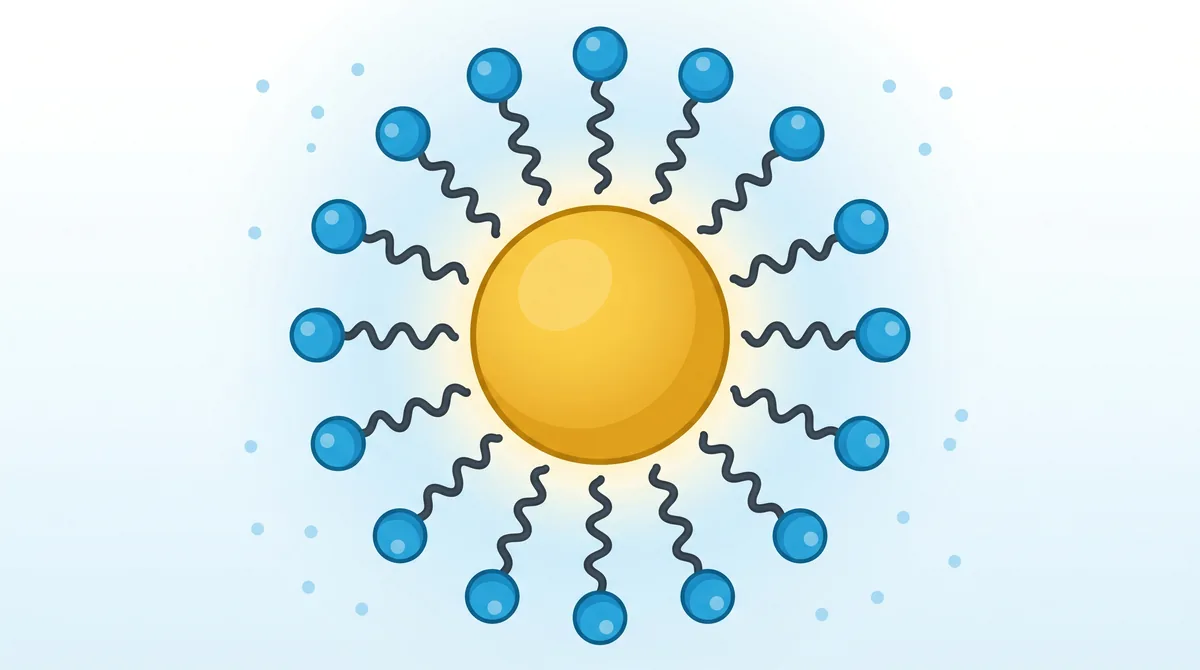
When you apply shampoo to wet hair, surfactant molecules position themselves at the boundary between water and oil. The oil-loving tails burrow into sebum, styling products, and environmental grime. The water-loving heads stay in the water surrounding your hair. As you massage and rinse, surfactants surround oil droplets completely, forming tiny spheres called micelles.
Inside each micelle, the oil is trapped. The hydrophobic tails point inward, cradling the oil. The hydrophilic heads point outward, interfacing with water. This structure allows oil, which normally won’t mix with water, to be suspended in water and rinsed away. Without surfactants, you’d just be moving oil around your scalp.
The efficiency of this process depends on surfactant concentration, water temperature, mechanical action (your scrubbing), and crucially, what else is dissolved in your water. Research published in the International Journal of Cosmetic Science confirms that surfactant micelle formation is highly sensitive to ionic strength, which is exactly what hard water changes.
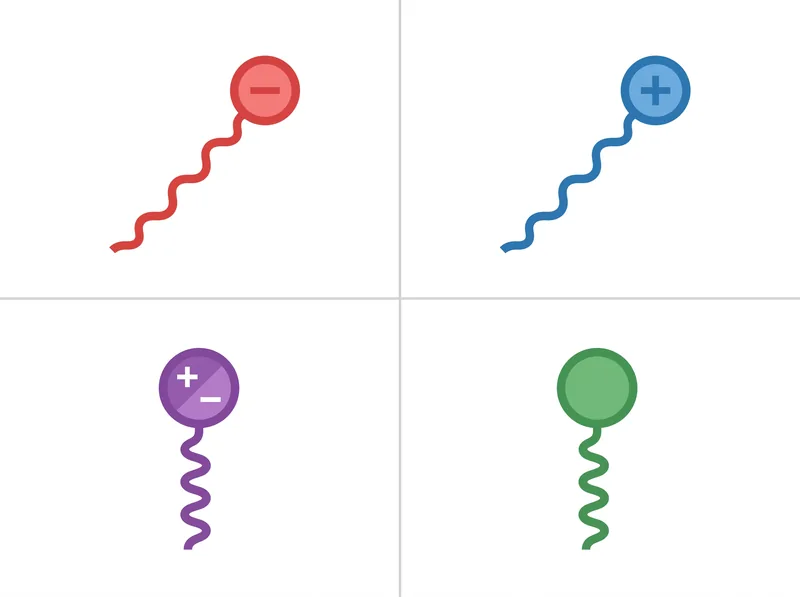 The four main surfactant types differ in their electrical charge and molecular structure, which determines their cleansing properties and compatibility with hair.
The Four Main Surfactant Categories in Hair Care
Surfactants are classified by the electrical charge on their hydrophilic head. This charge determines how aggressively they clean, how they interact with hair proteins, and whether they can coexist with other ingredients.
Anionic surfactants carry a negative charge. They’re the workhorses of the shampoo world: sodium lauryl sulfate (SLS), sodium laureth sulfate (SLES), ammonium lauryl sulfate. These molecules are powerful degreasers. They form micelles easily, generate abundant foam, and strip oil efficiently. That’s why they’re in most conventional shampoos. But they’re also why your hair can feel stripped, especially if it’s chemically treated or naturally dry.
Amphoteric surfactants are chameleons. They carry both a positive and negative charge, and their behavior changes based on pH. Cocamidopropyl betaine is the most common example. In acidic conditions, they act more cationic (positive). In alkaline conditions, more anionic (negative). They’re milder than pure anionics and often used as secondary surfactants to reduce irritation while maintaining cleaning power.
Nonionic surfactants have no charge at all. Decyl glucoside, coco-glucoside, and lauryl glucoside fall into this category. They’re the gentlest cleansers, producing minimal foam and causing less changeion to hair’s natural lipid layer. They’re common in ‘sulfate-free’ formulas but require higher concentrations to match anionic cleaning power.
Cationic surfactants carry a positive charge and don’t clean, they condition. Behentrimonium chloride and cetrimonium chloride are examples. Because hair carries a slight negative charge (especially when damaged), cationic molecules bind to the hair shaft, smoothing the cuticle and reducing static. You’ll find these in conditioners, not shampoos.
What ‘Sulfate-Free’ Really Means (and Doesn’t Mean)
Let’s be honest. ‘Sulfate-free’ became a marketing term before it became a scientific one. It doesn’t mean surfactant-free. It means the formula swapped anionic sulfates for other surfactant types, usually amphoteric or nonionic.
When a brand removes SLS or SLES, they typically replace it with a combination of milder surfactants at higher concentrations. Common replacements include sodium cocoyl isethionate, sodium lauroyl methyl isethionate, cocamidopropyl betaine, or decyl glucoside. These alternatives clean without the aggressive degreasing action of sulfates.
The trade-off? Sulfate-free shampoos often produce less foam, require more product per wash, and may not fully remove heavy styling products or mineral buildup. They’re gentler on color-treated hair and less likely to cause scalp irritation, but they’re not automatically ‘better.’ A study in the Journal of Clinical and Aesthetic Dermatology found that surfactant mildness doesn’t correlate with cleaning efficacy, you’re choosing between aggressive cleaning and gentle cleaning, not between dirty and clean.
For people with oily scalps or heavy product use, sulfate-free formulas can lead to buildup over time. For people with dry, damaged, or chemically treated hair, they can prevent further protein loss and cuticle damage. The ‘right’ choice depends on your hair’s condition and your water quality.
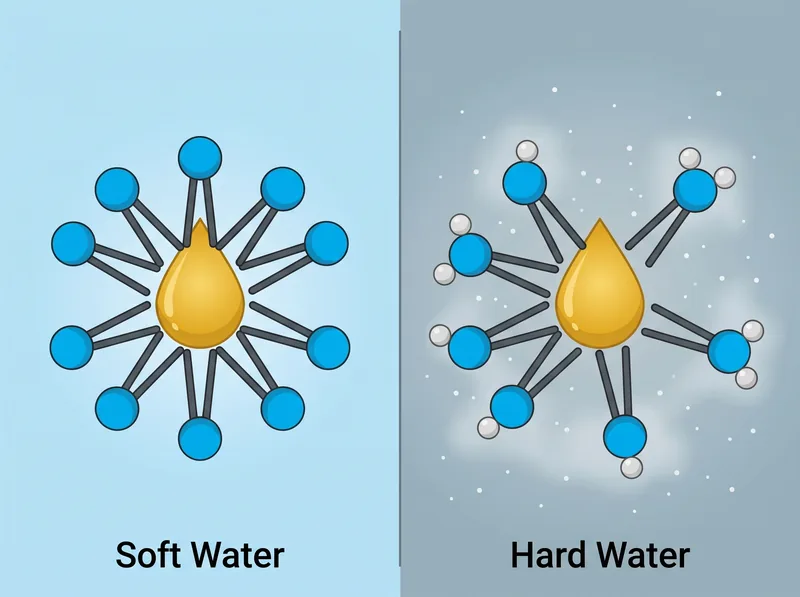 Hard water minerals bind to surfactant molecules, preventing them from properly encapsulating and removing oil from hair strands.
Why Hard Water Destroys Surfactant Performance
Here’s where Gulf residents hit a wall. Surfactants are designed to work in soft water, water with minimal dissolved minerals. But most of the Gulf region has extremely hard water, loaded with calcium and magnesium ions.
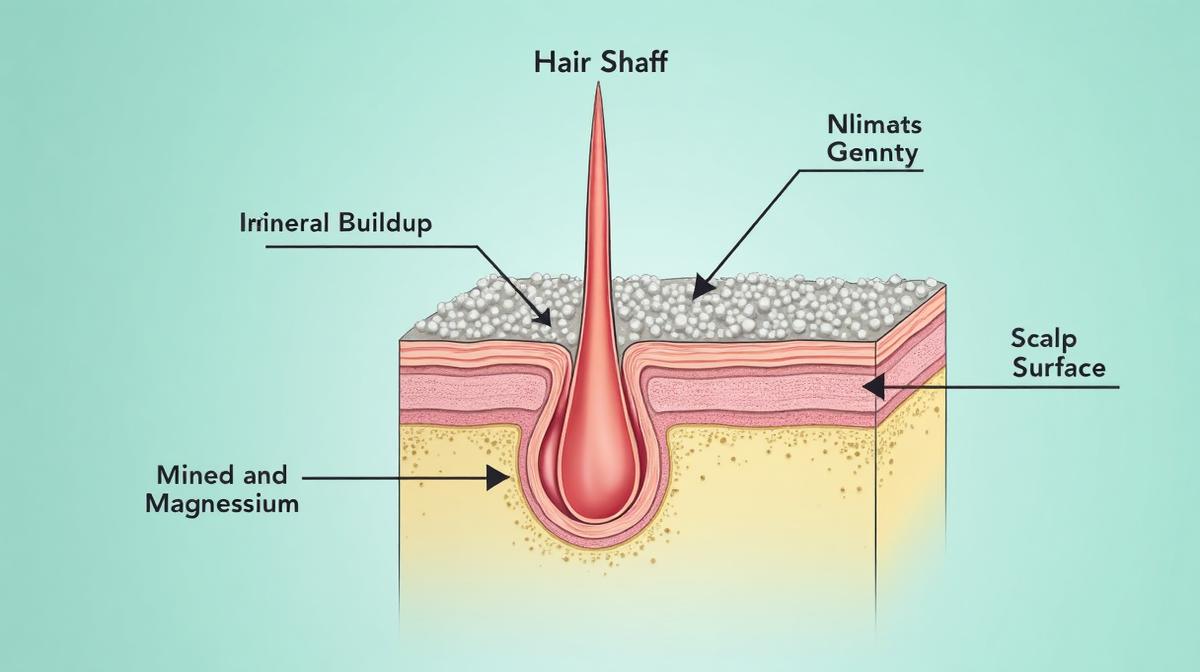
When anionic surfactants encounter calcium or magnesium, the negatively charged heads bind to the positively charged mineral ions. This neutralizes the surfactant’s charge and prevents proper micelle formation. Instead of surrounding oil droplets, surfactants clump together or precipitate out of solution entirely. You see this as soap scum on your shower walls. The same thing is happening on your hair.
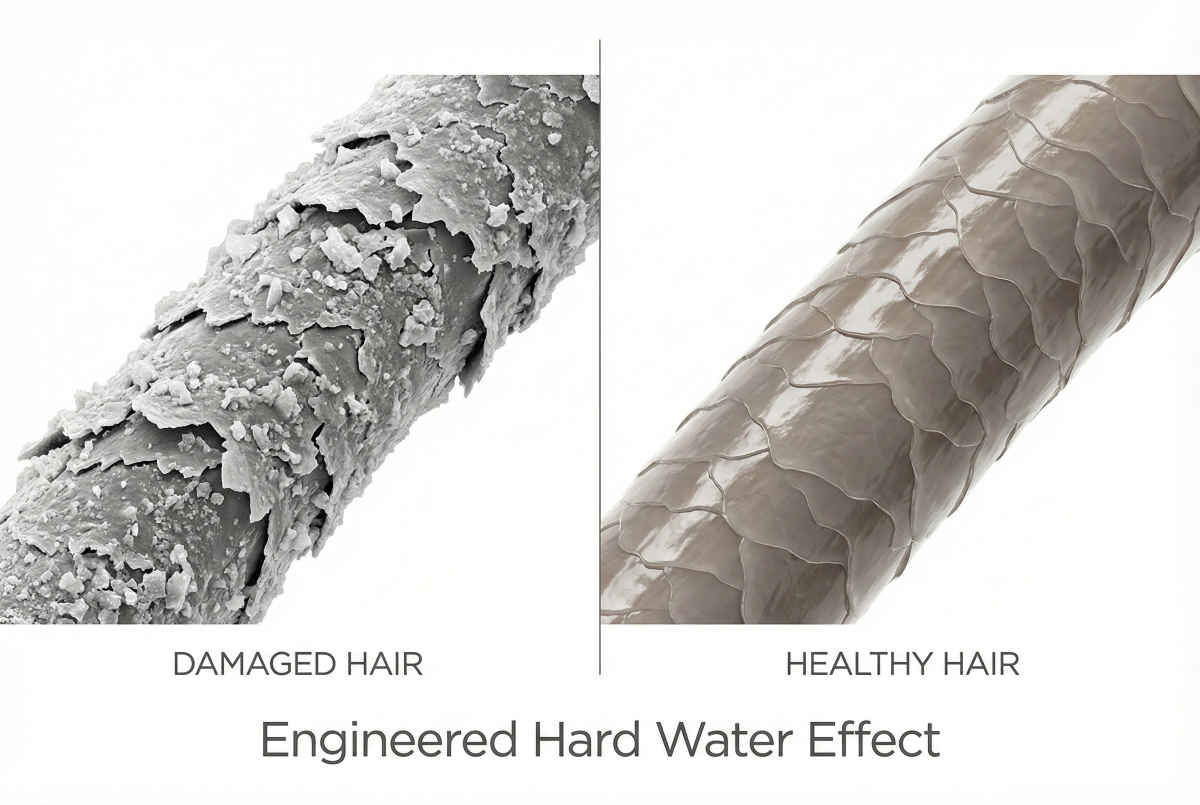
The result? You need more shampoo to achieve the same cleaning effect. Your hair feels coated or waxy even after rinsing. Products don’t lather as well. And over time, mineral deposits build up on the hair shaft, making it rough, dull, and resistant to styling. The US Geological Survey classifies water over 180 ppm as ‘very hard’, Gulf tap water often exceeds 300 ppm.
Amphoteric and nonionic surfactants are slightly more resistant to hard water interference because they don’t rely solely on negative charge for function. But they’re not immune. Even ‘gentle’ sulfate-free shampoos lose effectiveness in mineral-rich water.
This is why hard-water-improved formulas pair surfactants with chelating agents, molecules like EDTA, citric acid, or sodium phytate that bind calcium and magnesium before they can interfere with surfactants. A chelating shampoo like Regrowth+ uses this dual-action approach: chelators remove existing mineral buildup, while surfactants can then clean effectively in the softened water environment.
How Surfactant Concentration and pH Affect Cleaning
More surfactant doesn’t always mean better cleaning. There’s a threshold called the critical micelle concentration (CMC). Below this point, surfactant molecules float around individually and don’t clean well. Above it, they spontaneously form micelles and cleaning efficiency jumps. But once you’re well above CMC, adding more surfactant just wastes product.
Most shampoos contain 10-15% total surfactant content, well above CMC. The exact percentage depends on the surfactant type. Anionic sulfates are effective at lower concentrations. Nonionic surfactants need higher concentrations to achieve the same cleaning power, which is why sulfate-free shampoos often feel thicker and more concentrated.
pH also matters, especially for amphoteric surfactants. Human hair has a natural pH around 4.5-5.5, slightly acidic. Shampoos formulated at pH 5-6 help maintain the hair cuticle in a closed, smooth state. Alkaline shampoos (pH 7-9) cause the cuticle to swell and lift, which can improve deep cleaning but also increases protein loss and damage over time.
Amphoteric surfactants shine in pH-balanced formulas because their dual-charge nature allows them to clean effectively without requiring alkaline conditions. This is why you’ll often see cocamidopropyl betaine paired with mild anionic surfactants in ‘gentle cleansing’ formulas, it buffers the pH while maintaining foam and cleaning power.
Surfactant Blends: Why Shampoos Mix Multiple Types
No single surfactant is perfect. That’s why nearly every shampoo uses a blend of two to four different types. The primary surfactant (usually anionic) provides the bulk of cleaning power. Secondary surfactants (amphoteric or nonionic) modify the formula’s mildness, foam quality, and sensory feel.
A typical conventional shampoo might pair sodium laureth sulfate (anionic primary) with cocamidopropyl betaine (amphoteric secondary) and cocamide DEA (nonionic foam booster). This combination cleans aggressively but with less irritation than SLES alone, produces thick stable foam, and feels less stripping on hair.
Sulfate-free formulas often use sodium cocoyl isethionate or sodium lauroyl methyl isethionate (mild anionics) as the primary surfactant, paired with decyl glucoside (nonionic) and cocamidopropyl betaine (amphoteric). This blend is gentler but requires more mechanical action and rinse time to remove oil completely.
The ratio matters as much as the ingredients. A formula with 12% SLES and 2% betaine behaves very differently from one with 8% SLES and 6% betaine, even though both contain the same surfactants. This is why ingredient lists alone don’t tell the full story, formulation chemistry determines real-world performance.
Reading Ingredient Labels: What to Look For
Ingredients are listed in descending order by weight. In shampoo, water is always first, followed by the primary surfactant. If you see ‘Aqua, Sodium Laureth Sulfate, Cocamidopropyl Betaine,’ you’re looking at a conventional anionic-amphoteric blend.
If the second ingredient is sodium cocoyl isethionate, sodium lauroyl methyl isethionate, or decyl glucoside, it’s a sulfate-free formula. These ingredients are milder but often require co-surfactants to achieve adequate cleansing.
Look for chelating agents if you live in a hard water area. EDTA (listed as disodium EDTA, tetrasodium EDTA, or calcium disodium EDTA) is the most common. Citric acid and sodium citrate also provide chelating action while adjusting pH. Sodium phytate is a plant-derived alternative. If none of these appear in the first 10 ingredients, the formula isn’t improved for hard water.
Don’t confuse surfactants with conditioning agents. Ingredients like behentrimonium chloride, cetrimonium chloride, or quaternium compounds are cationic conditioners, not cleansers. They’re sometimes added to ‘cleansing conditioners’ or ‘2-in-1’ products but can cause buildup if your water is hard and your primary surfactants aren’t strong enough to remove them.
References
- Surfactant Aggregation and Adsorption at Interfaces - International Journal of Cosmetic Science
- Cleansing Formulations That Respect Skin Barrier Integrity - Journal of Clinical and Aesthetic Dermatology
- Hardness of Water - US Geological Survey
- Personal Care Products Council: Ingredient Safety - PCPC