Your hairstylist noticed it first. Then your partner. Now you see it too, your hair’s thinner at the crown, the temples are receding faster than they should, and there’s more grey than your younger sibling has. You’re only in your thirties.
You’ve blamed genetics. Stress. Maybe the hard water in the Gulf. But there’s another culprit you haven’t considered: the pack-a-day habit you’ve carried since university.
Here’s what most smokers don’t know. Every cigarette constricts the blood vessels feeding your follicles. Not temporarily, chronically. The nicotine you inhale triggers a vascular response that starves your scalp of oxygen and nutrients. And the oxidative stress? It’s aging your follicles decades faster than your genes intended.
This isn’t a scare tactic. It’s vascular biology. And the mechanism is both clear and reversible, if you act now.
The Vascular Stranglehold: How Nicotine Starves Your Follicles
Your hair follicles are metabolic factories. They’re among the fastest-dividing cells in your body, second only to bone marrow. That division requires massive amounts of oxygen, glucose, amino acids, vitamins, and minerals, all delivered through a dense network of capillaries surrounding each follicle bulb.
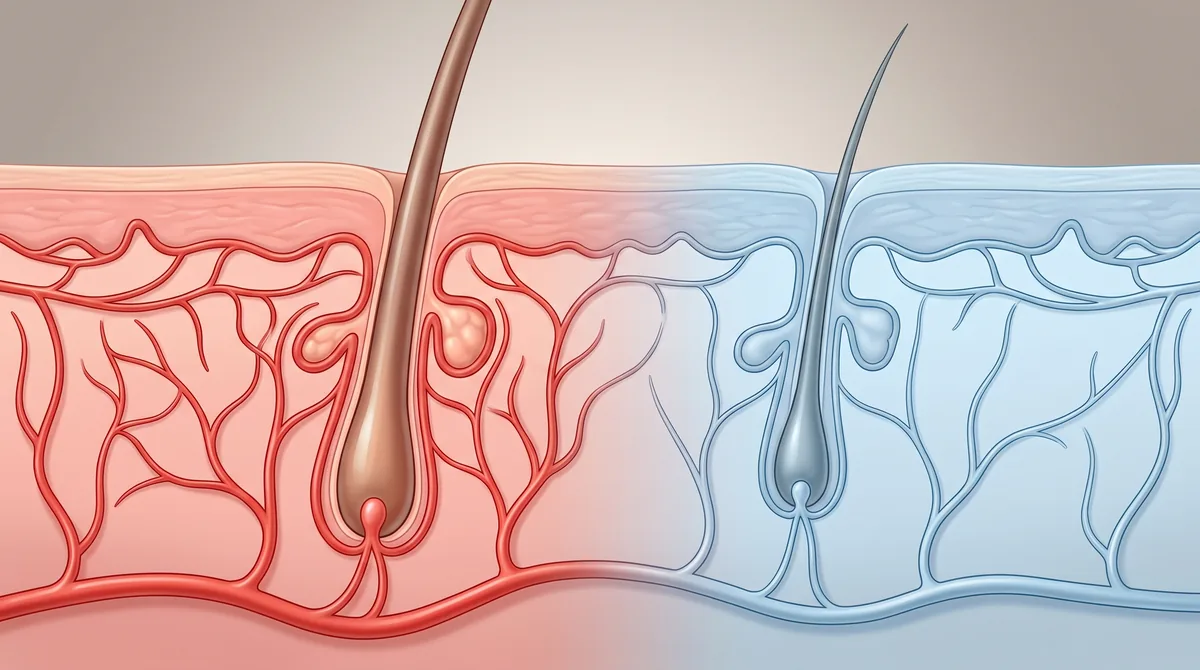
Nicotine is a vasoconstrictor. When you smoke, it binds to receptors in your blood vessel walls and triggers smooth muscle contraction. The vessels narrow. Blood flow drops. Your scalp, already one of the body’s least-prioritized tissues for circulation, gets even less.
A 2007 study in the Archives of Dermatology found that smokers had significantly reduced blood flow to scalp tissue compared to non-smokers, measured via laser Doppler flowmetry. The reduction was dose-dependent: heavier smokers showed worse perfusion.
But here’s the part that catches people off guard. The constriction isn’t just acute, it’s chronic. Repeated nicotine exposure causes vascular remodeling. The smooth muscle in your vessel walls thickens. The vessels lose elasticity. Even between cigarettes, your baseline blood flow remains compromised.
Think of it like this. Your follicles are trying to build a skyscraper with half the construction crew and intermittent material deliveries. The building still goes up, but it’s slower, weaker, and more prone to collapse under stress.
Oxidative Stress: The Free Radical Assault on Follicle DNA
Cigarette smoke contains over 7,000 chemicals. At least 250 are known toxins. Many are powerful oxidants, molecules that steal electrons from your cells, damaging proteins, lipids, and DNA in the process.
Your body has antioxidant defenses: glutathione, superoxide dismutase, catalase, vitamins C and E. But chronic smoking overwhelms them. The free radical load exceeds your neutralization capacity. The result? Oxidative stress, a state where cellular damage accumulates faster than it can be repaired.
Hair follicles are particularly vulnerable. They’re highly metabolically active, which means they generate reactive oxygen species (ROS) even under normal conditions. Add the external oxidant load from smoking, and you’ve got a perfect storm.
A 2013 study published in Biological Trace Element Research measured oxidative stress markers in the hair of smokers versus non-smokers. Smokers showed significantly improved levels of malondialdehyde (a marker of lipid peroxidation) and reduced levels of protective antioxidants.
The DNA damage is measurable. Follicle cells in smokers show higher rates of telomere shortening, the cellular aging clock, and increased markers of senescence. Your follicles are aging faster. Not metaphorically. Literally.
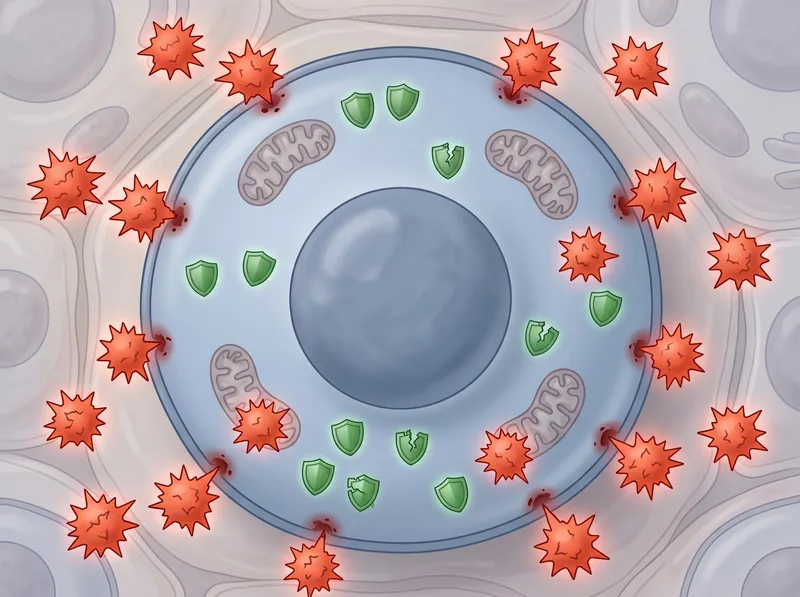 Cigarette smoke generates reactive oxygen species that overwhelm the follicle’s antioxidant defenses, damaging DNA and cellular machinery.
The Greying Acceleration: Why Smokers Go Grey Earlier
Grey hair isn’t just an aesthetic issue. It’s a biomarker of melanocyte stem cell depletion. And smoking accelerates it by decades.
Hair color comes from melanocytes, specialized cells in the follicle bulb that produce melanin and transfer it to growing hair shafts. These melanocytes are maintained by a stem cell reservoir in the bulge region of the follicle. When the stem cells are exhausted, melanin production stops. The hair grows grey.
Oxidative stress is the primary driver of melanocyte stem cell depletion. The same free radicals damaging your follicle DNA are attacking melanocyte stem cells, forcing them to differentiate prematurely or undergo apoptosis (programmed cell death).
A landmark 2013 study in the Italian Dermatology Online Journal found that smokers were 2.5 times more likely to develop premature greying (before age 30) compared to non-smokers, even after controlling for genetic factors.
The mechanism is dose-dependent. The more you smoke, the faster you grey. And unlike male pattern baldness, which you can treat with minoxidil or finasteride, melanocyte depletion is largely irreversible. Once the stem cells are gone, they don’t regenerate.
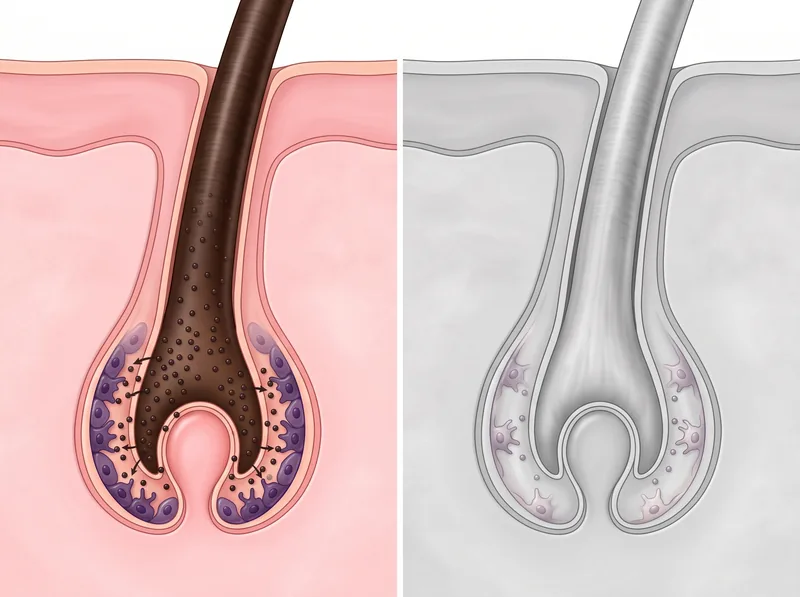 Oxidative stress from smoking accelerates melanocyte stem cell depletion, causing premature greying decades earlier than genetic programming would predict.
The Hormonal Cascade: DHT Amplification and Androgen Sensitivity
If you’re genetically predisposed to androgenetic alopecia (pattern hair loss), smoking makes it worse. Significantly worse.
Here’s why. Smoking increases circulating levels of androgens, particularly dihydrotestosterone (DHT), the hormone that miniaturizes follicles in pattern baldness. It does this through multiple pathways: increased aromatase inhibition, altered sex hormone-binding globulin (SHBG) levels, and direct effects on steroidogenic enzymes.
A 2007 study tracking 740 men found that moderate-to-heavy smokers had a significantly higher risk of moderate-to-severe hair loss compared to non-smokers, with a dose-response relationship. The effect was independent of age and family history.
But it’s not just about higher DHT levels. Smoking also increases follicle sensitivity to androgens. The oxidative stress and chronic inflammation upregulate androgen receptor expression in follicle cells, making them more responsive to the same amount of DHT.
Translation: if you’re genetically wired for pattern baldness, smoking accelerates the timeline and worsens the severity. You’re not just fighting your genes, you’re amplifying them.
The Environmental Multiplier Effect: Smoking Plus Hard Water
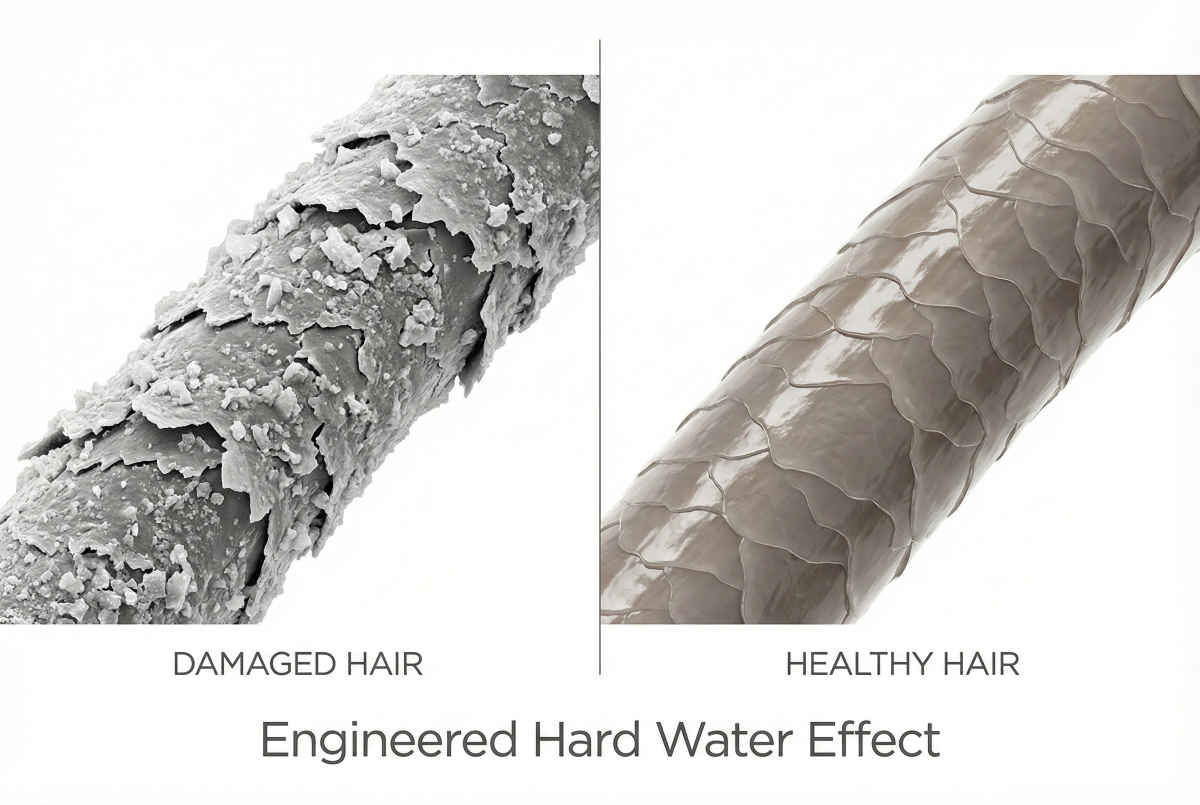
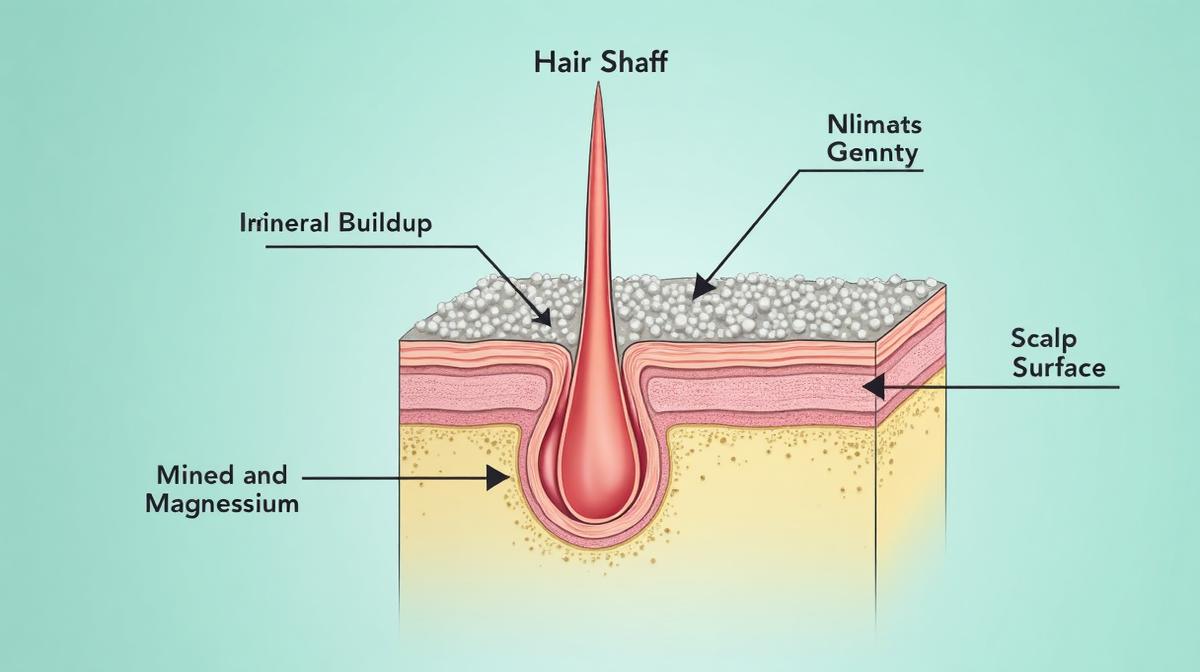
If you’re living in the Gulf, you’re dealing with a double hit. The region’s notoriously hard water already deposits calcium and magnesium onto your scalp, creating a mineral barrier that blocks follicle respiration and nutrient absorption.
Add smoking to that equation, and you’ve got compounded damage. The mineral buildup restricts topical circulation. The nicotine restricts internal circulation. Your follicles are being strangled from both sides.
Many Gulf residents who smoke report accelerated hair thinning after relocating to the region, not realizing they’re experiencing a synergistic effect between two independent stressors. The hard water alone is enough to trigger shedding. Smoking makes it exponentially worse.
The solution? Address both. Quitting smoking restores vascular function. Using a chelating shampoo like Regrowth+ removes the mineral deposits that compound the damage. Neither intervention alone is sufficient if you’re exposed to both stressors.
The Reversal Timeline: What Happens When You Quit
Here’s the good news. Vascular damage from smoking is largely reversible. Stop smoking, and your blood vessels begin to recover within weeks.
Within 20 minutes of your last cigarette, your heart rate and blood pressure drop. Within 2-3 weeks, circulation improves and lung function increases. Within 3 months, vascular endothelial function, the ability of your blood vessels to dilate and constrict properly, starts to normalize.
For your hair, the timeline is longer. Follicles operate on a 2-6 month growth cycle, so you won’t see new growth immediately. But studies show that smokers who quit experience measurable improvements in hair density and diameter within 6-12 months.
The oxidative stress reverses more slowly. Your antioxidant reserves need time to rebuild. Glutathione levels normalize over several months. DNA repair mechanisms gradually catch up with accumulated damage.
Greying, unfortunately, doesn’t reverse. Once melanocyte stem cells are depleted, they’re gone. But quitting stops further depletion, preventing additional greying beyond what’s already occurred.
Bottom line? The sooner you quit, the more follicles you save. Every month you continue smoking is another month of irreversible damage.
The Evidence You Can’t Ignore: What the Research Actually Shows
The link between smoking and hair loss isn’t speculative. It’s documented across multiple large-scale studies spanning decades.
A 2007 study published in the Archives of Dermatology tracked 740 Asian men aged 40-91 and found a strong dose-response relationship between smoking and hair loss severity. Men who smoked more than 20 cigarettes per day had the highest risk.
A 2020 meta-analysis reviewing 15 studies and over 10,000 participants confirmed the association across multiple ethnicities and geographic regions. The pooled odds ratio was 1.5, meaning smokers were 50% more likely to experience hair loss than non-smokers.
The mechanisms aren’t theoretical. They’ve been measured directly. Studies using scalp biopsies from smokers show reduced follicle diameter, shortened anagen (growth) phase, and increased follicle miniaturization compared to non-smokers.
And it’s not just men. A 2011 study found that female smokers were significantly more likely to experience early-onset androgenetic alopecia, with the effect most pronounced in women who started smoking before age 30.
The evidence base is solid. Smoking damages hair. The question isn’t whether, it’s how much you’re willing to lose before you stop.
References
- Smoking and Hair Loss: A Secondary Analysis of a Case-Control Study - Archives of Dermatology
- Oxidative Stress in Hair and Scalp of Smokers: A Comparative Study - Biological Trace Element Research
- Premature Graying of Hair and Smoking: An Association Study - Italian Dermatology Online Journal
- The Effects of Smoking on Hair Health: A Systematic Review - Journal of Dermatological Science