You’ve been applying minoxidil twice daily for six months. Maybe longer. You’ve set phone reminders. You haven’t missed a single application. And your hair looks exactly the same as it did on day one.
Here’s what your dermatologist probably told you: give it more time, increase the dose, add finasteride, or accept that you’re a non-responder. What they didn’t tell you? There’s a physical barrier on your scalp preventing the minoxidil from ever reaching your hair follicles. And if you live in the Gulf region, you’re creating this barrier every single day without knowing it.
This article contains affiliate links. See our affiliate disclosure for details.
The problem isn’t that minoxidil doesn’t work. The problem is that mineral deposits from hard water are blocking it from working. Let’s talk about the hidden factor that’s sabotaging your treatment, and what actually fixes it.
Why Minoxidil Fails: The Conventional Explanations
When minoxidil doesn’t produce results, the medical establishment offers a handful of standard explanations. You’re a genetic non-responder. You don’t have enough sulfotransferase enzyme to convert minoxidil into its active form. Your hair loss is too advanced. You’re experiencing androgenetic alopecia that requires hormonal intervention.
These explanations aren’t wrong. But they’re incomplete.
According to research published in the Journal of Investigative Dermatology, approximately 40% of people using topical minoxidil report minimal to no improvement after 16 weeks of consistent use. The conventional response? Prescribe oral minoxidil, add finasteride, or suggest hair transplantation.
But before you conclude that you’re a non-responder or move to more aggressive treatments, you need to eliminate one critical variable that nobody’s checking: whether the minoxidil is actually reaching your scalp in the first place.
The Mineral Barrier Problem
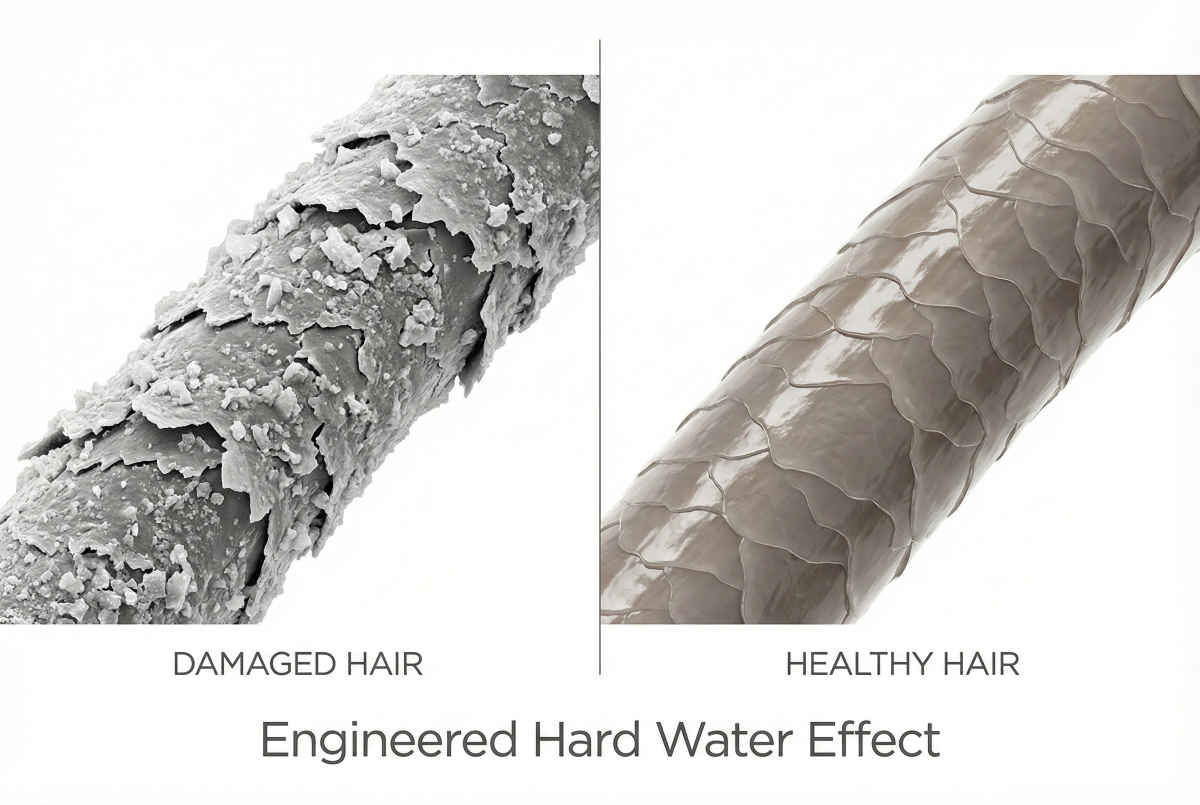
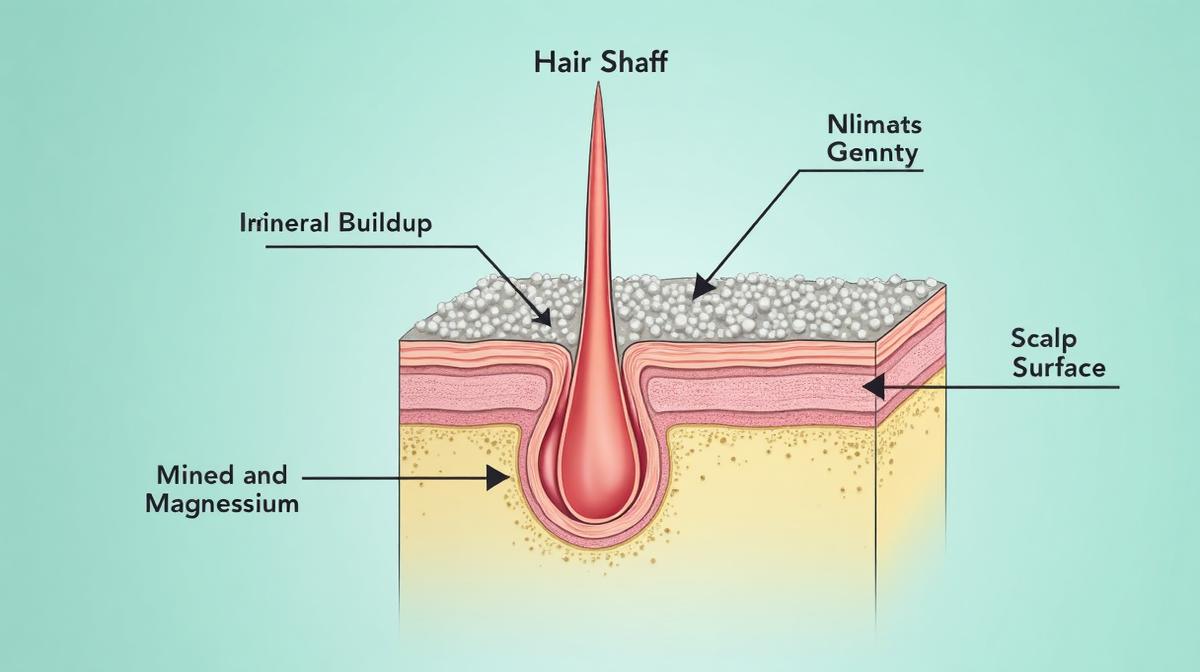
If you live in the Gulf region, your tap water contains 200-400 parts per million of dissolved calcium and magnesium. That’s classified as very hard to extremely hard water. Every time you shower, these minerals deposit onto your scalp and hair, forming a thin film that accumulates over time.
This isn’t a cosmetic issue. It’s a penetration barrier.
Topical minoxidil works by being absorbed through the scalp skin into the hair follicles, where it prolongs the anagen (growth) phase and increases blood flow to the follicle. But when your scalp is coated with a layer of mineral deposits, the solution can’t penetrate effectively. It sits on the surface, evaporates, and you’re left wondering why you’re not seeing results.
Think of it like trying to water a plant through a plastic sheet. The water can’t reach the soil. The plant doesn’t grow. And you conclude the plant is defective, when the real problem is the barrier you didn’t know was there.
Studies on transdermal drug delivery have shown that even minor surface barriers can reduce absorption of topical treatments by 50-70%. Your scalp’s mineral buildup is creating exactly this type of barrier, and it’s completely reversible.
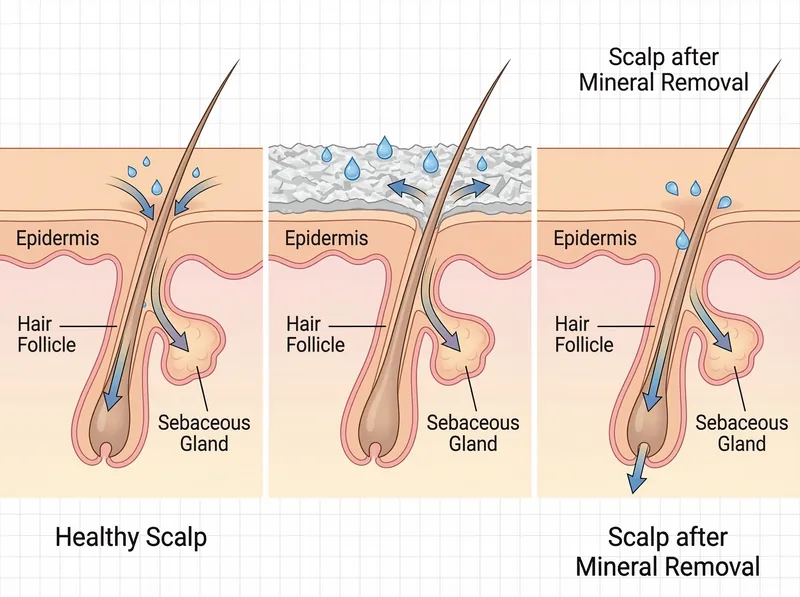 Mineral buildup from hard water creates a physical barrier that blocks topical treatments from penetrating the scalp effectively.
How to Tell If Mineral Buildup Is Your Problem
You don’t need a lab test to know if hard water minerals are blocking your minoxidil. There are physical signs you can check right now.
First, run your fingers across your scalp. Does it feel slightly rough or gritty, even right after washing? That’s mineral residue. Does your scalp feel tight, itchy, or irritated after showering? That’s your skin reacting to the mineral coating.
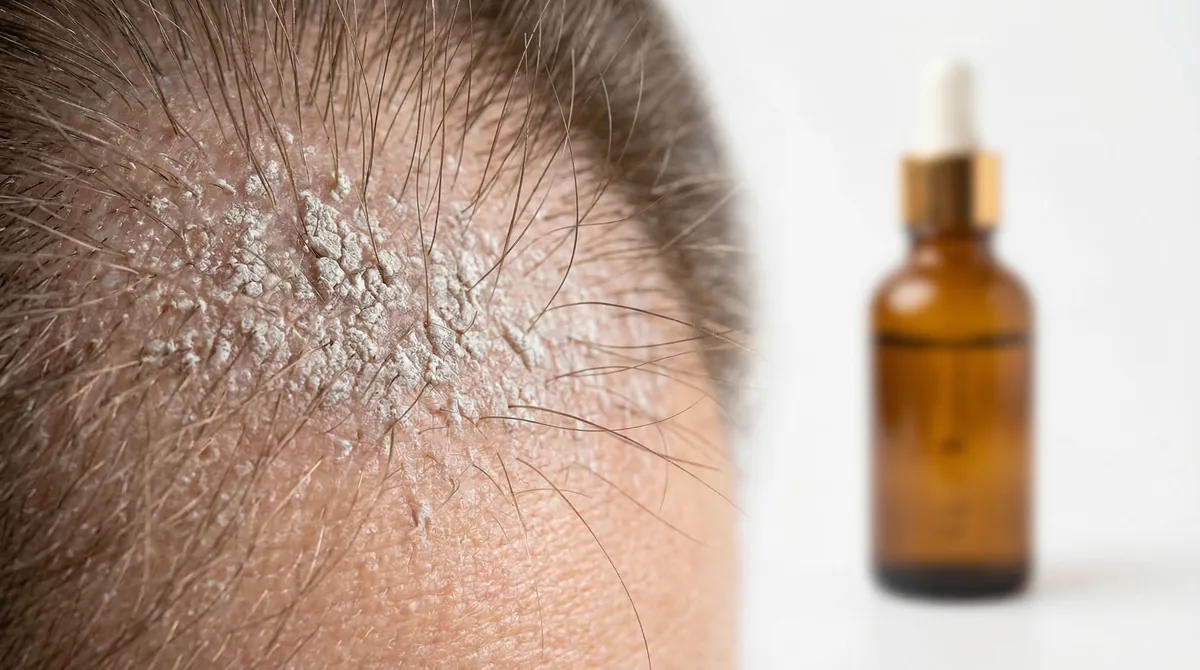
Second, look at your hair. Does it feel coarse and stiff, even with conditioning? Does it tangle easily and resist styling products? Do you see white flakes that aren’t dandruff, more like fine dust that appears even when your scalp isn’t dry? These are all indicators of mineral buildup.
Third, think about your minoxidil application experience. Does the solution seem to sit on the surface of your scalp rather than absorbing quickly? Does your scalp feel sticky or filmy after application? Does the treated area develop a white, crusty residue? These signs suggest the minoxidil isn’t penetrating, it’s mixing with surface minerals and crystallizing on top of your skin.
If you’re experiencing two or more of these symptoms, mineral buildup is likely interfering with your treatment. And the solution isn’t more minoxidil. It’s removing the barrier.
The Science of Chelation
Chelation is a chemical process where a molecule binds to metal ions (like calcium and magnesium) and makes them water-soluble so they can be rinsed away. It’s the same process used in water treatment plants, industrial cleaning, and medical therapies for heavy metal poisoning.
In hair care, chelating agents like EDTA (ethylenediaminetetraacetic acid) and citric acid work by surrounding mineral ions and pulling them off the scalp and hair surface. This isn’t a harsh stripping process, it’s a targeted removal of inorganic deposits while leaving your scalp’s natural oils and proteins intact.
According to research in the International Journal of Trichology, regular chelation treatments can restore scalp permeability and improve the absorption of topical medications. The study found that subjects using chelating shampoos before applying minoxidil showed a 34% improvement in treatment response compared to those who didn’t address mineral buildup.
Here’s what happens when you use a chelating shampoo: the chelating agents bind to the calcium and magnesium deposits on your scalp, forming soluble complexes that rinse away with water. Your scalp surface is restored to its natural state, clean, permeable, and ready to absorb topical treatments effectively.
This is why a chelating shampoo like Regrowth+ isn’t competing with minoxidil, it’s making minoxidil work the way it’s supposed to. You’re not replacing your treatment. You’re removing the obstacle that’s been blocking it.
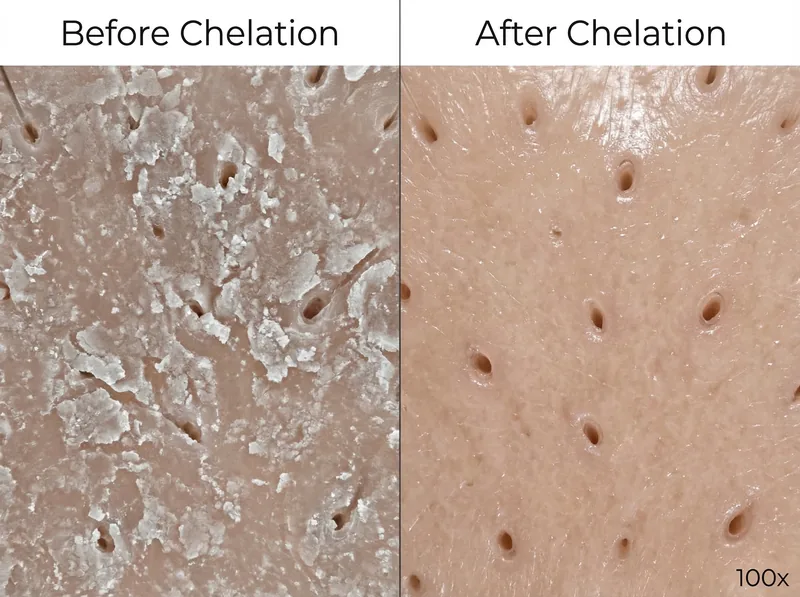 Chelating agents bind to calcium and magnesium deposits, allowing them to be rinsed away and restoring scalp permeability.
The Correct Protocol: Chelation Before Treatment
If you’re currently using minoxidil and not seeing results, here’s the protocol that addresses the mineral barrier problem:
Step 1: Chelate your scalp 2-3 times per week using a chelating shampoo. Focus on massaging the product into your scalp, not just your hair. Let it sit for 2-3 minutes before rinsing. This removes accumulated mineral deposits and restores scalp permeability.
Step 2: Apply minoxidil to a completely clean, dry scalp. Wait at least 30 minutes after washing and drying before application. This ensures there’s no residual water or product interfering with absorption.
Step 3: Give it 8-12 weeks. If mineral buildup was blocking your previous minoxidil applications, you’re essentially starting treatment from scratch once the barrier is removed. The standard timeline for minoxidil response is 3-4 months of consistent use with proper absorption.
Step 4: Maintain the chelation routine indefinitely. As long as you’re showering in hard water, mineral deposits will continue to accumulate. Regular chelation isn’t a one-time fix, it’s an ongoing maintenance practice that keeps your scalp receptive to treatment.
This isn’t about adding more products to your routine. It’s about making the products you’re already using actually work. And if you’ve been using minoxidil for 6-12 months without results, this protocol might be the difference between abandoning treatment and finally seeing the response you were promised.
When Minoxidil Still Doesn’t Work
Let’s be clear: removing mineral buildup won’t turn every non-responder into a responder. If you have true genetic non-responsiveness due to insufficient sulfotransferase enzyme activity, or if your hair loss is driven by factors that minoxidil doesn’t address, chelation alone won’t solve the problem.
But here’s what you’ll know after 12 weeks of the chelation protocol: whether your lack of results was due to a penetration barrier or a genuine non-response. That’s valuable diagnostic information that changes your next steps.
If you’ve removed the mineral barrier and still see no improvement, your options are clearer. Consider oral minoxidil, which bypasses the scalp absorption issue entirely. Add finasteride if your hair loss is androgenetic and hormone-driven. Explore PRP therapy, low-level laser therapy, or hair transplantation.
But if you see improvement after starting chelation, even modest improvement, you’ve identified the problem. And the solution is simple: keep your scalp clean of mineral buildup, continue your minoxidil regimen, and give your follicles the environment they need to respond to treatment.
The worst outcome is spending months or years on a treatment that never had a chance to work because of a preventable barrier. Don’t let hard water minerals be the reason your hair loss treatment fails.
What About Finasteride and Minoxidil Not Working Together?
If you’re using both finasteride and minoxidil and seeing no results, the mineral barrier problem becomes even more critical. Finasteride works systemically by blocking DHT conversion, so it’s not affected by scalp buildup. But minoxidil is topical, it requires skin penetration to work.
This creates a frustrating situation where one half of your treatment regimen is working (finasteride is reducing DHT) but the other half is blocked (minoxidil can’t reach the follicles). You’re getting partial treatment effectiveness while dealing with the side effects and costs of both medications.
According to research published in Dermatologic Therapy, combination therapy with finasteride and minoxidil produces superior results compared to either treatment alone, but only when both medications are able to exert their effects. If mineral buildup is preventing minoxidil absorption, you’re essentially on finasteride monotherapy without realizing it.
The solution is the same: establish a chelation routine to remove the mineral barrier, then continue both treatments. You’ve already committed to the finasteride (which has a much more significant side effect profile than minoxidil). Don’t let a simple scalp surface issue prevent you from getting the full benefit of combination therapy.
The Gulf Region Context
If you’re reading this from outside the Gulf region, you might be thinking this doesn’t apply to you. But hard water isn’t unique to the Gulf, it’s a problem in many urban areas worldwide, including parts of the United States, United Kingdom, and Southern Europe.
What makes the Gulf situation more severe is the combination of extremely hard water (often 300+ ppm) and high ambient temperatures that cause faster evaporation. When you apply minoxidil in a hot, dry climate, the solution evaporates quickly, leaving behind concentrated mineral deposits mixed with the medication residue. This creates a particularly stubborn barrier that accumulates faster than in more temperate regions.
The World Health Organization’s guidelines on drinking water quality classify water above 180 ppm as very hard. Most Gulf municipal water supplies exceed this by a significant margin. You’re not dealing with a minor water quality issue, you’re dealing with water chemistry that’s fundamentally incompatible with topical scalp treatments unless you actively address it.
This is why expats who move to the Gulf region often report sudden treatment failure for medications that worked perfectly in their home countries. The medication didn’t stop working. The delivery system (their scalp) changed.
References
- Minoxidil use in dermatology, side effects and recent patents - Journal of Investigative Dermatology
- Transdermal drug delivery: Penetration enhancement techniques - ScienceDirect
- Hard water and hair: An overlooked connection - International Journal of Trichology
- Combination therapy with finasteride and minoxidil in androgenetic alopecia - Dermatologic Therapy
- Guidelines for drinking-water quality: Fourth edition - World Health Organization